

Why Does The Number Of Decks Matter In Blackjack?
If you’ve ever noticed that some blackjack tables use a single deck while others have six or more, you might have wondered why it matters. The number of decks can subtly influence the game, and understanding these effects can help you make more informed decisions—whether you’re playing in a casino or online. While fewer decks can offer certain advantages, games with multiple decks come with their own considerations.
In this post, we’ll take a closer look at how the number of decks can affect your odds, what changes when you play multiple hands, which deck sizes tend to offer the best odds, and how online casinos typically set up their blackjack games.
Read on to learn more.
Do Blackjack Odds Change With The Number Of Decks?
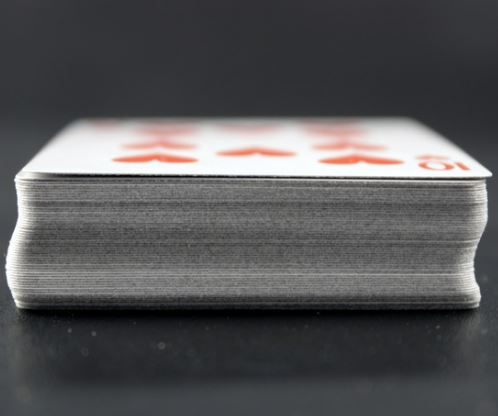
Yes, the number of decks can affect the likelihood of certain hands, particularly a natural blackjack—a two-card hand totalling 21. In general, using fewer decks slightly increases the chances of hitting a blackjack.
For instance, in a single-deck game, there are 52 cards in total. The distribution of high-value cards and Aces creates a small but noticeable chance of drawing a blackjack. As more decks are added, this distribution shifts slightly, gradually altering the probability.
Does Playing Multiple Hands In Blackjack Increase Odds?
Playing multiple hands at once does not directly improve the chances of any single hand winning, nor does it increase the likelihood of drawing a natural blackjack.
Many players enjoy dealing several hands per round for the variety and faster pace. Handling multiple hands means interacting with more cards in each round, which can make the game feel more engaging. However, it also requires placing separate bets for each hand, which can quickly add up if you are working with a limited budget.
It’s important to remember that blackjack always involves an element of chance. Even when playing multiple hands, the probabilities for each hand remain the same. Later sections will explore how small differences in the number of decks can affect the outcomes of individual hands. Always play responsibly and within your means.
How Many Deck Blackjack Has The Best Odds?
Single-deck games generally give slightly better chances of drawing a natural blackjack compared with games using multiple decks. For example, a single-deck game offers roughly a 4.83% chance, while a six-deck game reduces it only slightly, to about 4.75%.
Although this difference exists, it is relatively small in practice. Other factors, such as table rules—like whether the dealer hits or stands on a soft 17, or whether doubling after splitting is allowed—usually have a greater impact on overall outcomes than the number of decks alone.
Most casinos use multi-deck shoes, often with six or eight decks, to accommodate more players and make certain approaches harder to spot. So, while fewer decks offer a modestly higher chance of hitting a blackjack, the choice of deck size is often determined more by table availability and personal preference than by any dramatic change in probability.
How Many Decks Do Online Casinos Use For Blackjack?
Online blackjack works a little differently from games in land-based casinos. Instead of shuffling physical cards, online tables use a Random Number Generator (RNG) to simulate each draw. This allows online games to use six, eight, or even more decks without affecting the pace of play.
Most online tables aim to replicate the casino experience, so six to eight decks are the most common. While the RNG ensures that each card is independent of previous draws, the effect of deck size on the chance of drawing a natural blackjack still exists, just as it does in live games.
One key difference online is that players cannot see other players’ cards, so some observational approaches aren’t possible. Still, knowing the rules—such as blackjack payouts, doubling, and surrender options—often has a bigger impact on your game than the exact number of decks.
As always, gamble responsibly and only play with money you can afford to lose, whether online or in a physical casino.
Conclusion
The number of decks in blackjack can influence small details, such as the likelihood of drawing a natural blackjack, but the effect is generally subtle. Single-deck games offer slightly higher chances, while six-deck games are only marginally lower. Many casinos favour multiple decks for practical reasons, such as accommodating more players and maintaining the flow of the game.
For most players, understanding table rules and managing their playing budget is far more important than the exact number of decks. The basic approaches—hitting, standing, splitting, or doubling—apply regardless of deck size.
In short, fewer decks give a slightly better chance of a natural blackjack, but the overall experience and rules of the game usually matter more. Whether playing single-deck, double-deck, or multi-deck blackjack, the focus should be on playing responsibly and making choices that suit your comfort level.
Always gamble responsibly. Never wager more than you can afford to lose, set personal limits, take regular breaks, and treat betting as a form of entertainment rather than a source of income.
If gambling starts to affect your well-being or finances, seek support early. Independent organisations such as GamCare and GambleAware provide free, confidential help for anyone who needs it.
*All values (Bet Levels, Maximum Wins etc.) mentioned in relation to this game are subject to change at any time.
**The information provided in this blog is intended for educational purposes and should not be construed as betting advice or a guarantee of success. Always gamble responsibly.