What Is a Face Card? Meaning, Examples & Usage in Card Games
Playing cards sit at the heart of many games, and face cards often garner attention first. They appear across home games and casino tables, and knowing a little about them might make it easier to understand the deck.
This post introduces face cards, highlights which ones are included, and shows how they may appear in games like poker and blackjack. You will see practical examples, plus a discussion of how face cards could influence betting choices if you choose to play.
There’s also a short overview of face cards in slots and online casino games, followed by a few common misconceptions clarified.
Read on to find out more.
What Are Face Cards? Definition and Key Features
Face cards are playing cards that depict people rather than showing a simple number. They usually feature elaborate illustrations and are visually distinct from the numbered cards in a deck.
Most commonly, these cards represent royalty, although some decks include other historical figures. Each suit—hearts, diamonds, clubs and spades—contains a few of these special cards. Their appearance alone makes them easy to spot, but their actual importance depends on the rules of the game being played.
Face cards are usually designed to be recognisable: Kings and Queens often face forward or are shown in profile, while Jacks tend to appear as younger figures. Decks vary widely, from simple modern designs to historically inspired artwork.
Which Cards Are Considered Face Cards in a Standard Deck?
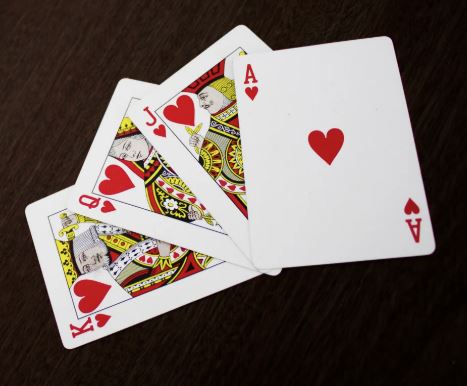
In a standard 52-card deck, the cards most commonly recognised as face cards are the King, Queen and Jack. Each suit contains one of each.
Before looking at each card individually, it might help to understand that face cards are not just visually distinctive—they often carry unique roles in games. Their ranking and value might vary depending on the game being played, and knowing their general characteristics first might make it easier to grasp their specific features.
Below, we break down the King, Queen and Jack, highlighting how they are depicted and what makes each one stand out.
The King, Queen, and Jack Explained
King (K): The King is generally the most prominent face card in most games. Many decks depict the King wearing a crown and regal attire. Some historic decks link certain Kings to famous figures, but in games, its significance is determined by the rules being followed.
Queen (Q): The Queen represents a female monarch, usually shown with a crown and robes. Its rank is often below the King. Some cards carry symbolic meanings, though in gameplay, these are mostly decorative.
Jack (J): Sometimes called the Knave, the Jack is typically a younger court figure. Its ranking generally falls below the Queen but above numbered cards. In certain games, it might also have special roles beyond basic ranking.
Face cards stand out visually, but their role in a hand is determined by game rules. For example, in some games, the order of ranking differs from others. This can make it important to observe how each game treats these cards.
How Are Face Cards Used in Popular Games Like Poker and Blackjack?
Face cards may appear in many games, and their value or effect might change depending on the rules.
Poker
In poker, having strong face cards might improve the chance of forming competitive hands. Combinations like two Jacks or Queens can be particularly notable, while sequences including a King and Queen might help with straights or high-card hands. Matching suits might make certain combinations more appealing if you are playing.
How face cards are used often depends on factors such as your position at the table or previous betting patterns. For instance, a suited King–Queen might be played differently depending on where you are in the betting order.
Blackjack
In blackjack, face cards generally count as 10 points each. This makes them useful for reaching higher totals. A combination of a face card and an Ace might form the highest initial hand.
The Ace interacts closely with face cards because it might count as either 1 or 11, affecting your total. The number of face cards in play might guide decisions like whether to take another card, though outcomes are always influenced by chance.
Rules differ between tables and apps, so it might help to understand how each platform treats these cards before placing bets.
Play Slots & Online Casino Games


Can Face Cards Affect Your Betting Decisions in Card Games?
Face cards may influence how you evaluate hands if you are playing, but their effect depends on the context.
In poker, strong face card combinations might justify more assertive moves, especially if other conditions—such as position or prior play—are favourable. A single high card, however, might be less compelling if paired with weaker cards. Focus on how combinations interact with your strategy rather than relying on face cards alone.
In blackjack, face cards often contribute to higher totals because of their value. Some players observe which 10-point cards have appeared, but no method can predict outcomes with certainty. If you are betting, only use money you might afford to lose.
Whether in poker, blackjack or other card games, thoughtful decision-making guided by the rules, probabilities, and careful financial limits tends to be more useful than depending solely on the presence of face cards.
How Are Face Cards Represented in Slots and Online Casino Games?
Face cards also show up in slot machines and online games as pictorial symbols. They often serve as mid-range icons, while other symbols handle bonus features or jackpots. Some slots even base themes entirely on playing cards, giving the King, Queen and Jack detailed designs.
In digital table games, software reproduces face cards so that they closely match a physical deck. This might make it easier to recognise cards quickly and follow gameplay if you are playing online.
Paytables and game guides usually explain the value of face card symbols. Being familiar with this ensures you understand how these symbols contribute to potential wins in a game.
Common Misconceptions About Face Cards
Even simple concepts might be misunderstood:
- The Ace is a face card: Incorrect. Only the King, Queen and Jack qualify as face cards.
- Face cards always have the highest value: Not necessarily. Their value depends on the game. Non-face cards might sometimes form stronger hands.
- All face cards are equal across games: Each game has its own ranking rules. A Jack might outrank some cards in one game but be lower in another.
Grasping these points can help avoid confusion while playing.
Finally, gambling should always remain a form of entertainment. If play affects your finances or well-being, seek support. UK organisations such as GamCare and GambleAware offer confidential guidance. Only use funds you might afford to lose, and treat games as leisure rather than a source of income.
Play Casino Games Online at King Casino
If you’re curious about online casino games, we at King Casino provide a licensed and regulated environment for you to explore. Our UK Gambling Commission (UKGC) licence ensures that games are run fairly and that measures are in place to support players.
You’ll find a variety of slots and classic table games, including both Random Number Generator (RNG) versions and live dealer options, so you can pick the type of gameplay that suits you. There are tools to help you set limits that match your circumstances and keep your play in check.
If you choose to join, you can create an account, set your limits, and familiarise yourself with King Casino at your own pace.
**The information provided in this blog is intended for educational purposes and should not be construed as betting advice or a guarantee of success. Always gamble responsibly.