What Happens When a Slot Machine Hits?: Random Outcome Explained
Ever wondered what really goes on inside a slot machine when you press that spin button and the reels start rolling? You might have seen flashing lights, heard jingles, and felt the anticipation build as the reels slow.
What is actually happening when a slot “hits”? Many imagine hidden patterns or tricks, but the way outcomes are decided is technical and governed by strict rules rather than any secret rhythm.
If you want to understand whether skill, timing, or other actions can influence a result, this article will take you through the mechanics, the safeguards and the common misunderstandings. Read on to see how a spin becomes a result, and what that means for players.
How Do Slot Machines Generate Results?
Modern slots rely on software to produce results that are unbiased and independent. At the core is a Random Number Generator, or RNG, which runs continuously and produces sequences of numbers. The moment a player activates a spin, the machine locks in a current RNG value and maps it to a specific arrangement of symbols on the reels.
Although the reels animate to create excitement, the outcome is already determined at the instant the spin starts. The game’s programming then displays the corresponding symbols and checks them against the paytable to calculate any payout. Because each spin is treated separately by the RNG, previous spins have no effect on future outcomes.
Regulators and independent testing labs examine RNGs and the games that use them to ensure the software behaves as intended and conforms to legal standards. This independent oversight helps protect players and maintain fairness. A closer look at what randomness really means comes next, with detail on how tests and certification work.
Are Slot Machine Outcomes Truly Random?
Yes—when games have been certified and tested, their outcomes are effectively random within the structure of the game. Certification involves rigorous checks by third‑party testing houses that run very large numbers of simulated spins to ensure results sit within expected statistical ranges. These checks look at the RNG, the paytable, and the way the software maps numbers to symbol combinations.
Randomness here means that no one can predict or influence a specific spin. Casinos and players alike cannot change the result of a spin once it has been locked in by the RNG. The testing process also verifies that the displayed probabilities and the game’s advertised Return to Player (RTP) are consistent with how the software actually performs over long periods.
With that assurance in place, it helps to know how the RNG itself produces those outcomes and why prediction is not feasible.
Understanding RNG Technology in Slot Machines
RNG technology is a specialised algorithm designed to produce sequences of numbers that cannot be reasonably anticipated. It operates at high speed, producing vast numbers of values per second so that an outcome can be assigned instantly whenever a spin is triggered.
Beyond the algorithm itself, manufacturers implement safeguards such as seed values and entropy sources to ensure the number stream is unpredictable. Independent test labs check the algorithm’s output for statistical uniformity and the game developer’s mapping of numbers to reel positions. Together, this combination of engineering and oversight is what keeps gameplay fair and consistent.
This technical setup also explains why attempts to forecast outcomes are ineffective. The next section looks explicitly at the question of prediction and the reasons it is not possible.
How Does an RNG Work?
A Random Number Generator produces a continuous stream of numerical values that are then translated into possible reel positions. When a player starts a spin, the RNG’s current output is used to select one of those positions; that selection determines which symbols appear. The process is computational and instantaneous, with no cycle or pattern usable by a person attempting to predict results.
Certification ensures the RNG performs correctly under many scenarios, and audits check the way numbers map to wins in the paytable. Together, these measures help ensure that the visible outcomes match the probabilities the developer intended.
Can Slot Machine Spins Be Predicted?
Predicting spins is not possible. The volume and speed of the RNG output, the way numbers map to symbol combinations, and the security around the software all make any reliable prediction impractical. There are simply too many possible combinations and too much randomness in the selection process for patterns to be exploited.
Key points to bear in mind include:
- Each spin is independent; results do not form a sequence that can be forecast.
- There are no meaningful cycles or “due” wins built into certified systems.
- Operators and players lack any mechanism to influence the RNG at the moment of a spin.
Understanding these technical and regulatory barriers clarifies why behaviours or rituals cannot change outcomes. With that settled, it is useful to examine how payouts are expressed and what players can realistically expect.
Slot Machine Payouts: What to Expect
Payouts are defined by the game’s paytable and summarised by the Return to Player (RTP) percentage. RTP represents the long‑term average proportion of stakes returned to players across many spins; a 96% RTP indicates that, over a very large number of spins, the game will return about £96 for every £100 wagered in aggregate.
In practice, individual sessions can vary widely from that long‑run average. A single session might include a sequence of small wins, a large payout, or no wins at all. Developers design games with different volatility profiles: some deliver frequent small wins, others pay more rarely but in larger amounts. These characteristics determine how a session feels, even though the underlying randomness remains the same.
RTP and volatility are explained in a game’s information pages or paytable, which is the best place to check how a particular game is likely to behave. Next, we’ll look at what specific events within a game trigger a win and how bonus features fit into the payout picture.
What Triggers a Slot Machine Win?
Wins occur when symbol combinations match those listed as winners in the paytable, or when special features are activated. Standard wins happen when symbols line up on active paylines or satisfy other pattern rules the game defines. Separate from these, many modern games include additional mechanics that can create more ways to win.
Bonus Features and Jackpots
Bonus features add variety and the potential for larger rewards. Common examples include free spins, where a player receives additional spins without further stake; multipliers, which increase a win by a fixed factor; and pick‑and‑win mini‑games that reveal additional prizes. Progressive jackpots are a different category: these pools grow over time as players place wagers, and they pay out when a specific, usually rare, condition is met.
Each feature has clear trigger conditions set out in the game rules. Understanding those conditions helps explain why some spins produce ordinary wins while others unlock bonus rounds or larger payouts.
Standard Payout Lines Explained
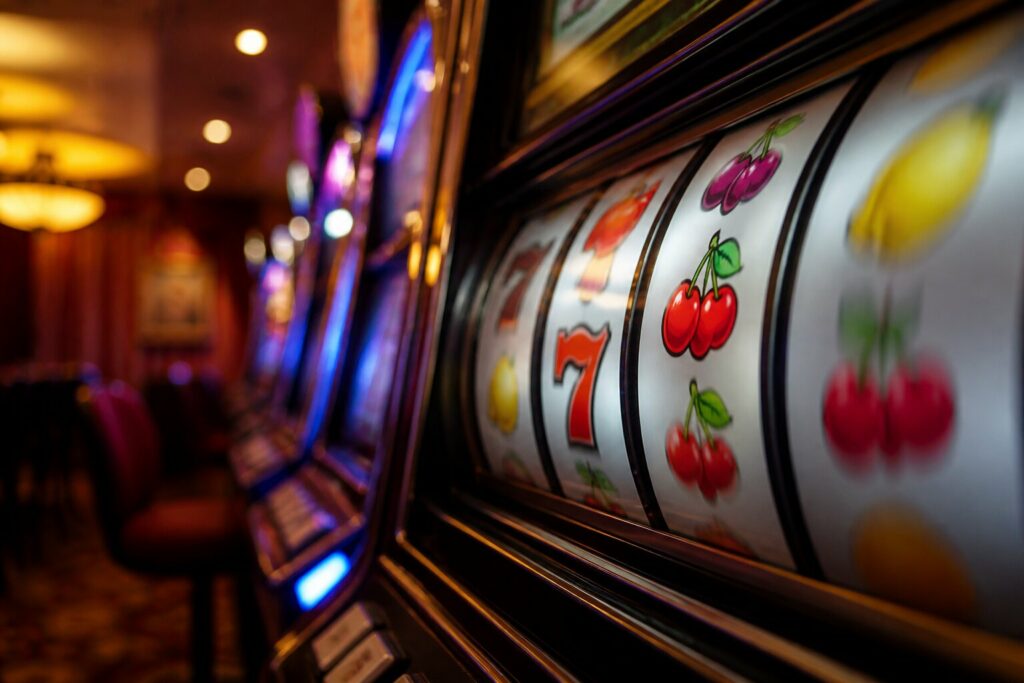
Paylines determine where matching symbols must appear to create a win. A game may use a single straight payline or multiple, more complex patterns that zigzag across the reels. The paytable lists the payouts for each matching pattern. For instance, three identical fruit symbols on an active line might yield a modest prize, whereas landing five of a high‑value symbol could result in a much larger payment.
Because the RNG selects outcomes independently, the chance of a given payline producing a win is set by the game’s design rather than by when or how a person plays.
Now that you know how wins occur, it helps to dispel some widespread myths that often mislead players.
Common Myths About Slot Machine Outcomes
A number of persistent beliefs about slot machines are not supported by how tested systems actually operate. For example, the idea that machines become “due” for a win after a losing streak or that a machine can be set to pay out at particular times misunderstands how RNGs and certified software function. Similarly, timing a button press or performing rituals has no effect because the outcome is selected by the RNG at the instant the spin is triggered.
Other myths suggest casinos can tweak machines to favour certain players or to withhold wins until specific conditions are met. Properly tested and certified games do not allow selective adjustment of outcomes in that way; auditing processes and independent testing are designed to detect and prevent such practices.
When thinking about these myths, it is useful to focus on verifiable information: the game rules, the paytable, and the results of independent testing. These sources explain how a game is intended to behave and are the best tools for making informed choices. This closes the discussion and leads naturally into using that information when choosing which games to play confidently and with clear expectations.
Explore Casino Games at King Casino
Ever thought about exploring something new for a bit of fun? Step into our site and take a look at the range of casino games we’ve brought together for you to enjoy.
Getting going is nice and simple – just set up an account, add some funds and you’re ready to play. We hope you enjoy spending some time with us at King Casino!
**The information provided in this blog is intended for educational purposes and should not be construed as betting advice or a guarantee of success. Always gamble responsibly.