

Most Common Bonus Ball Numbers and Lottery Draw Patterns Explained
Ever wondered what sits behind those bonus balls in your favourite draw? You are not alone. Many players are curious about whether certain numbers really do appear more often, or if there are patterns worth paying attention to.
This guide explains how bonus balls are selected, what “most common” actually means in numbers, and how to read the charts that people share online. We will also look at ideas like hot and cold numbers, and where patterns can be misleading.
If you choose to take part in any lottery, set a budget you can afford and stick to it. Outcomes are random, and past results do not predict future ones.
How Lottery Draws Work And How Bonus Balls Are Chosen
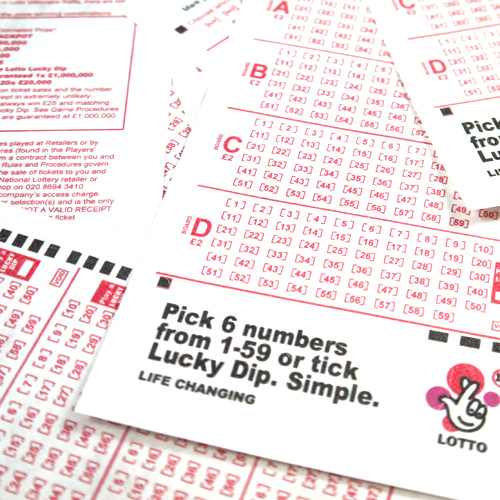
Lotteries use either mechanical ball machines or certified random number generators. Both approaches aim for the same result, a draw where every eligible number has an equal chance of selection. Independent auditors test equipment, check procedures and review outcomes to confirm that the process stays fair.
The bonus ball is drawn after the main numbers. In formats where the bonus comes from the same pool as the main numbers, it is selected from the balls that remain after the main draw. For example, if a lottery uses 59 balls, selects 6 main numbers, then draws a bonus from the ones left, each of those remaining balls has an equal chance of being chosen, in that case 1 in 53. If the bonus comes from a separate pool, every ball in that pool has the same chance on each draw.
Because each draw is independent, the bonus ball does not “remember” what happened last time. A number that has just appeared can be drawn again, and a number that has not appeared for months is not due. With that in mind, let us look at how frequency counts take shape.
Which Bonus Ball Numbers Appear Most Often?
When you analyse past results, some numbers will seem to be ahead. That is expected. If you tracked 1,000 draws with a bonus drawn from a 53-ball remainder, the average number of appearances per bonus number would be about 1,000 divided by 53, roughly 18 to 19 times. Some numbers will sit higher than that, others lower, simply due to normal swings.
How uneven can it look without implying anything unusual? Quite uneven, especially with fewer draws. Over a few hundred results it is common to see gaps of several appearances between the most frequent and the least frequent numbers. As the sample grows into the thousands, those differences tend to narrow, although they never flatten perfectly.
So, when a chart shows that a particular bonus number has appeared more often recently, it is not a signal that the draw favours it, it is just a snapshot of where the random swings have landed so far.
Can Past Bonus Ball Frequency Predict Future Draws?
Short answer, no. Past frequency does not change a number’s chance next time. Each eligible number has the same probability on every draw. This is why ideas like “overdue” numbers are not reliable, a long absence does not make a number more likely, just as a recent run does not make it less likely.
Two common thinking traps sit behind many predictions. The first is the gambler’s fallacy, the belief that outcomes should quickly balance out. The second is the hot-hand fallacy, the belief that a recent run will continue. Both ignore the independence of each draw. Recognising that independence is the simplest way to read past data without reading more into it than is there.
With that settled, it is still interesting to ask which patterns are worth checking for, and how to tell ordinary variation from something that might warrant a closer look.
What Patterns In Draws Are Statistically Meaningful?
Most patterns people notice, like repeats, long gaps or clusters, are exactly what you expect from a fair random process. You will see repeated bonus numbers across short windows, streaks where a number shows up more than usual, and long quiet spells. None of these are unusual by themselves.
A pattern becomes meaningful only if it is consistently outside what random variation would produce. Analysts look at tests of uniformity, for example comparing the distribution of bonus appearances against the even spread you would expect, and asking whether the difference is larger than random fluctuation can explain. With enough draws, a persistent skew might raise questions about equipment wear, ball weight or process issues, which is precisely why routine checks and audits exist.
If you are simply reading public results, the practical takeaway is this, large samples make claims stronger, small samples make patterns look bolder than they really are.
Play Slots & Online Casino Games


Do Hot And Cold Numbers Matter For Bonus Balls?
Hot numbers are those that have appeared more often within a chosen window. Cold numbers are those that have appeared less often. These labels describe the past, they do not alter the next draw. A number tagged hot today can be quiet for months. A cold one can appear several times in quick succession. The labels can be useful shorthand when talking about what has happened, but they are not a guide to what will happen.
If you like following hot or cold charts, treat them as a way to organise information rather than a strategy. The core probability for each eligible number stays the same on each draw, regardless of recent form.
Now that the big ideas are clear, it helps to know how to read the tools people use to present bonus ball data.
How To Read Bonus Ball Frequency Tables And Heatmaps
Frequency tables list each number and show how many times it has appeared as the bonus. Some tables also add percentages, the last seen date, and the gap since it last appeared. When percentages are shown, check what they mean, some are a share of all bonus appearances, others show appearances per draw.
Heatmaps present the same information visually. Numbers with higher counts get deeper colours, lower counts are lighter. A heatmap can include extra clues, like shading for recent months so you can see whether a number’s count is driven by a burst of recent appearances or a steady run over time. Always check the legend, colour scales can vary between charts.
If the table or heatmap focuses on a short period, like the last 50 or 100 draws, expect bigger swings. Over longer periods, colours and counts tend to settle closer together.
How To Track Bonus Ball Trends Yourself
If you enjoy the numbers side of things, it is easy to keep a simple record. Many people use a spreadsheet and update it with the latest results. From there, you can total how many times each number has appeared as the bonus, note the date of its last appearance, and calculate the gap since then. A rolling window, for example the most recent 200 draws, helps you compare recent activity with the long-term picture.
Charts make the data easier to see at a glance. A bar chart of bonus counts by number highlights the current leaders and laggards. A line chart of appearances over time can show whether any short bursts are driving the picture. Some people add a moving average to smooth out short-term bumps, which can make comparisons between periods easier.
Whatever approach you take, keep the earlier point in mind, tracking is about understanding the history, not forecasting the next outcome.
Methods To Calculate Frequency, Gaps And Runs
Frequency is simply the count of how many times a number has appeared as the bonus within the period you are studying. Turning that into a percentage can help comparisons, divide a number’s bonus appearances by the total number of draws in your sample, then express the result as a percentage.
Gaps measure absence. For each number, note the number of draws since it last appeared as the bonus. You can track the current gap, as well as the average and the longest gap for each number. These figures show how uneven real-world sequences can look, even when every draw is fair.
Runs capture bursts. A run might be a number appearing as the bonus three times within 20 draws, or twice in back-to-back draws. Defining the window upfront, for example runs within the most recent 100 draws, keeps comparisons consistent. When you review runs, expect them to appear from time to time without implying any change in the underlying fairness of the draw.
Common Misconceptions About Bonus Ball Patterns
It helps to clear away a few myths so the statistics make more sense:
- Overdue numbers are not more likely. A long gap does not increase the chance next time, each draw is independent.
- Hot numbers are not favoured. Recent frequency does not change future probability.
- Small samples prove nothing. Big swings over short windows are normal and do not signal bias.
- Repeats are not special. A number appearing again soon after a previous appearance is expected to happen occasionally.
- Patterns do not provide a method to improve outcomes. Charts help you understand history, they do not change the fairness of future draws.
Taken together, the key ideas are straightforward. Bonus balls are selected through a process designed to give every eligible number the same chance on each draw. Past data can be organised and explored in useful ways, and it is interesting to see how real sequences rise and fall, but those observations do not predict what comes next. If you choose to play, keep it affordable and for entertainment, and treat the statistics as a way to satisfy your curiosity rather than a way to change the odds.
**The information provided in this blog is intended for educational purposes and should not be construed as betting advice or a guarantee of success. Always gamble responsibly.