Grid Slots: Cluster Pays Mechanics and Game Features Explained
Grid slots use a different approach to traditional online slot games, replacing fixed paylines with grid-based layouts and alternative ways of forming winning combinations. One of the mechanics commonly associated with these games is cluster pays, where matching symbols must connect in groups to qualify for a payout.
Understanding how these games work can help you recognise the differences between individual titles and their features. This guide explores cluster pays, compares grid mechanics with traditional paylines and examines the bonus features, themes and visual styles commonly found in grid-based slots.
Read on to learn more.
What Are Cluster Pays in Grid Slots?
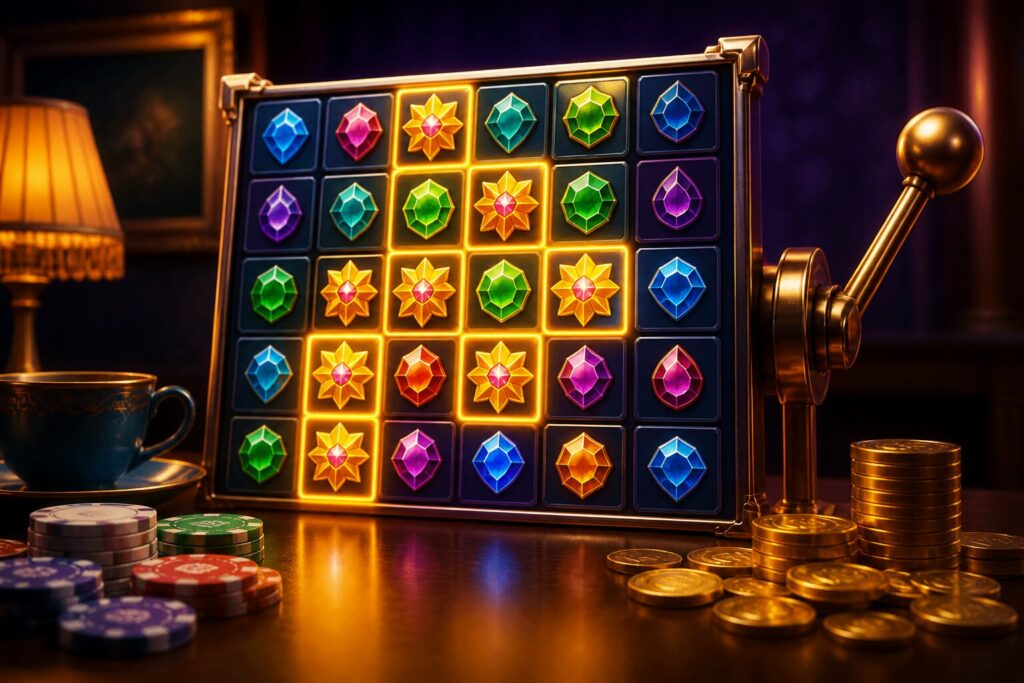
Cluster pays are a win mechanic in which matching symbols must form a connected group on the playing grid to qualify for a payout. Unlike traditional paylines, these groups do not need to follow a predefined sequence across the reels. Instead, symbols generally need to touch horizontally or vertically, although the exact rules depend on the individual game.
Each game specifies its own minimum cluster size. For example, one title might require five matching symbols to form a winning cluster, while another may require nine or more. The relevant requirements are explained in the game’s paytable or information section.
When a qualifying cluster appears, the game calculates the payout according to its rules and symbol values. In games with cascading mechanics, the winning symbols then disappear and new symbols fall into the empty spaces. If another qualifying cluster forms, a further payout may be awarded as part of the same spin.
This process can repeat until no additional winning combinations appear or another game-specific condition is met. However, cascades do not guarantee further wins, and each subsequent outcome remains subject to the game’s random number generation.
There are differences between individual titles. For example, Reactoonz uses a cluster-based system on a 7×7 grid, with connected groups contributing to its additional Quantum Leap and Gargantoon features. Aloha! Cluster Pays uses a different grid format and cluster requirements.
These examples demonstrate how developers can apply the same general mechanic in different ways. The precise rules, qualifying combinations and payout values should always be checked in the relevant game’s information.
Next, it is useful to understand how cluster pays compare with the traditional payline format.
How Do Cluster Pays Differ from Traditional Paylines?
Traditional paylines use predetermined patterns across the reels. To form a winning combination, matching symbols must land in the correct positions along one of the game’s active paylines. Depending on the title, winning combinations commonly begin on the leftmost reel and continue towards the right.
Cluster pays work differently. Rather than following a specific line, matching symbols must connect with one another in a qualifying group. Their position on the grid is less restricted, provided they meet the game’s adjacency and cluster-size requirements.
The main differences include:
- Winning patterns: Traditional slots use predefined paylines, whereas cluster games award qualifying combinations based on connected symbols.
- Symbol positions: Cluster mechanics allow matching groups to form in different areas of the grid rather than requiring a particular sequence across reels.
- Cascading mechanics: Some cluster slots remove winning symbols and replace them with new ones, potentially creating additional combinations during the same spin.
- Additional features: Certain games include special symbols, multipliers and feature meters that interact with winning clusters.
It is important to remember that these differences describe how the games calculate results, not an improvement in the likelihood of winning. The number of possible combinations, payout structure and return to player (RTP) are determined by each individual game’s design.
Traditional paylines and cluster pays therefore offer different formats for presenting slot mechanics. Neither format guarantees more frequent wins or better returns.
The next section examines the additional features developers may incorporate into grid-based games.
Key Features of Grid Slot Games
Grid slot games can include several additional mechanics alongside cluster pays. These features influence how symbols behave, how bonus rounds are triggered and how the game presents its results. Their availability and operation vary between titles.
Innovative bonus rounds
Some grid slots include bonus rounds that introduce additional mechanics or change how the grid operates. Examples include transforming symbols, special wilds, symbol removal features and dedicated bonus stages.
In Reactoonz, the Quantum Leap meter fills as winning clusters are formed. When the meter reaches the required level, it activates a feature that can alter the grid. The game also includes other features, such as the Gargantoon, which interacts with the symbols on the playing area.
These mechanics are part of the game’s predefined rules. They do not give players control over random outcomes or guarantee a particular result.
Cascading symbols and avalanche reels
Cascading symbols, sometimes called tumbling or avalanche mechanics, are commonly found in grid-based slots.
When a winning combination is recognised, the relevant symbols are removed from the grid. New symbols then fall into the available spaces, creating a different arrangement. If another qualifying combination appears, the process can repeat.
This means a single spin can contain several consecutive stages of symbol removal and replacement. The number of cascades and any resulting payouts depend on the game’s rules and the symbols generated.
Not every cascade produces another win, and a chain of consecutive wins is never guaranteed.
Multipliers and expanding grids
Multipliers are another feature found in some grid slots. They modify the value of qualifying wins according to the game’s specific multiplier rules.
For example, Jammin’ Jars features moving wild symbols and multiplier mechanics. These interact with winning combinations according to the game’s rules.
Other titles may include expanding grids, where additional rows or columns become available during certain features. This changes the playing area and the number of positions in which symbols can appear.
Multipliers and grid expansions can affect potential payouts, but they do not guarantee a higher return. Their effect depends on the specific conditions of the feature, the symbols involved and the game’s paytable.
Understanding these mechanics provides a clearer picture of how different grid slots are structured. It is also important to distinguish between a game’s visual features and the mathematical rules governing its outcomes.
Top Benefits of Playing Grid Slots
Grid slots have several distinctive characteristics that separate them from traditional payline games. Rather than representing guaranteed advantages, these differences relate to their mechanics, presentation and overall format.
Alternative winning combinations
One defining characteristic is the use of connected symbol groups instead of fixed paylines. This allows qualifying combinations to appear in different positions across the grid, subject to the game’s cluster requirements.
Distinctive visual presentation
Many grid slots use animations to illustrate winning clusters, disappearing symbols and cascading sequences. These visual effects provide feedback about the events taking place during a spin and help explain how individual features operate.
Additional game mechanics
Some titles incorporate transforming symbols, moving wilds, multipliers and feature meters. These mechanics can make one game structurally different from another, even when both use cluster pays.
Different levels of mechanical complexity
The basic concept of connecting matching symbols is relatively straightforward. However, additional features can introduce more complicated rules, including different cluster requirements, special symbol interactions and bonus conditions.
You can find the relevant explanations in each game’s help section or paytable. These are useful resources for understanding the mechanics before deciding whether a particular format is suitable for you.
It is worth noting that additional features do not necessarily make a game more rewarding. Grid slots, like other casino games, involve financial risk, and the outcomes are determined by the game’s underlying mathematics and random number generation.
Beyond their mechanics, grid slots also differ considerably in their themes and visual presentation.
Popular Themes and Visual Styles in Grid Slot Games
Grid slot games cover a variety of themes, with developers using different visual styles to complement their underlying mechanics. The symbols, animations, backgrounds and sound effects all contribute to how a title presents its gameplay.
Adventure and exploration
Adventure-themed slots often use settings inspired by ancient civilisations, treasure hunting and exploration. Gonzo’s Quest is a well-known example of a game featuring cascading symbols, with winning symbols disappearing before new ones fall into position.
Although it uses avalanche mechanics, it is important to distinguish this from cluster pays: Gonzo’s Quest does not use the same connected-cluster winning system found in dedicated cluster slots.
Futuristic and science-fiction themes
Science-fiction games often feature unusual characters, technology-inspired symbols and animated visual effects. Reactoonz, for example, uses colourful alien characters and a distinctive grid layout to present its cluster-based mechanics and additional features.
Candy, fruit and nature themes
Bright colours and recognisable symbols are common in games based around sweets, fruit and natural environments.
Sweet Bonanza is an example of a candy-themed game that uses a tumble mechanic and pays for matching symbols appearing anywhere on the reels, rather than relying on traditional paylines. It is therefore useful as an example of an alternative symbol-matching format, rather than a conventional cluster-pays grid slot.
Nature-inspired titles, meanwhile, may use flowers, insects and other environmental imagery. Honey Rush uses a hexagonal layout and cluster-based mechanics, illustrating another way developers can present connected-symbol gameplay.
Animation and sound design
Visual and audio effects are also important parts of grid slot presentation. Animations can indicate when a cluster qualifies for a payout, when symbols disappear and when a particular feature becomes available.
Sound effects may accompany these events, providing additional feedback as the grid changes. These elements are designed to communicate game activity and complement the theme, rather than influence the outcome of a spin.
Ultimately, themes and visual styles vary from one title to another, while the underlying mechanics determine how winning combinations, cascades and bonus features operate.
Understanding the distinction between these elements makes it easier to compare grid slots and identify the features that define each game.
This covers the main mechanics, features and visual styles associated with grid slots. As you compare individual games, remember that cluster requirements, payout structures, RTP figures and bonus conditions can vary considerably between titles. Always consult the game’s paytable and rules for accurate information.
Slot games involve financial risk, and no particular mechanic or feature guarantees a win. Only gamble if you are aged 18 or over, and never spend more than you can afford to lose. If gambling stops being enjoyable or becomes difficult to control, consider using available deposit limits, time-outs or self-exclusion tools.
Explore Casino Games at King Casino
Interested in exploring online casino games? Visit King Casino to browse our selection of games and find out more about the titles and features available on our platform.
If you decide to join us, creating an account is straightforward. You can take time to explore the site, familiarise yourself with the games and learn about the available features before deciding whether to play.
We want you to stay in control of your gambling. That’s why we offer responsible gambling tools to help you manage your activity, set personal limits and monitor your play.
Gambling should always be treated as entertainment, not a way to make money. Only gamble what you can afford to lose. You must be 18 or over to play.
**The information provided in this blog is intended for educational purposes and should not be construed as betting advice or a guarantee of success. Always gamble responsibly.