
Can You Still Buy Lottery Tickets in Shops? In-Store Guide
Popping into your local shop for a lottery ticket has long been a familiar routine for many across the UK. But with more activity shifting online, you might wonder whether buying tickets in person is still possible—or sensible for you.
Whether you prefer choosing numbers at the counter or paying with cash, this guide explains how in-store purchases work, what to expect at the till and practical tips for keeping everything straightforward. Read on to find out exactly how and where you can still take part in lottery draws on the high street.
Where Can You Buy Lottery Tickets on the High Street?
Lottery tickets are available at a wide range of high-street retailers. Newsagents commonly offer both draw tickets and scratchcards behind the counter, while small convenience stores often carry the same products for customers picking up essentials.
Supermarkets typically have lottery terminals at customer service desks or tills, and many petrol forecourts with mini-markets also sell tickets. Off-licences and corner shops that are registered retailers provide another convenient option.
Not every shop will stock every lottery product, because retailers need specific approval and equipment to sell them. Look for the official lottery logo displayed near the till or on the shop frontage to confirm tickets are sold there. Next, we’ll cover what actually happens when you buy a ticket in one of these stores.
How Does Purchasing in a Shop Work?
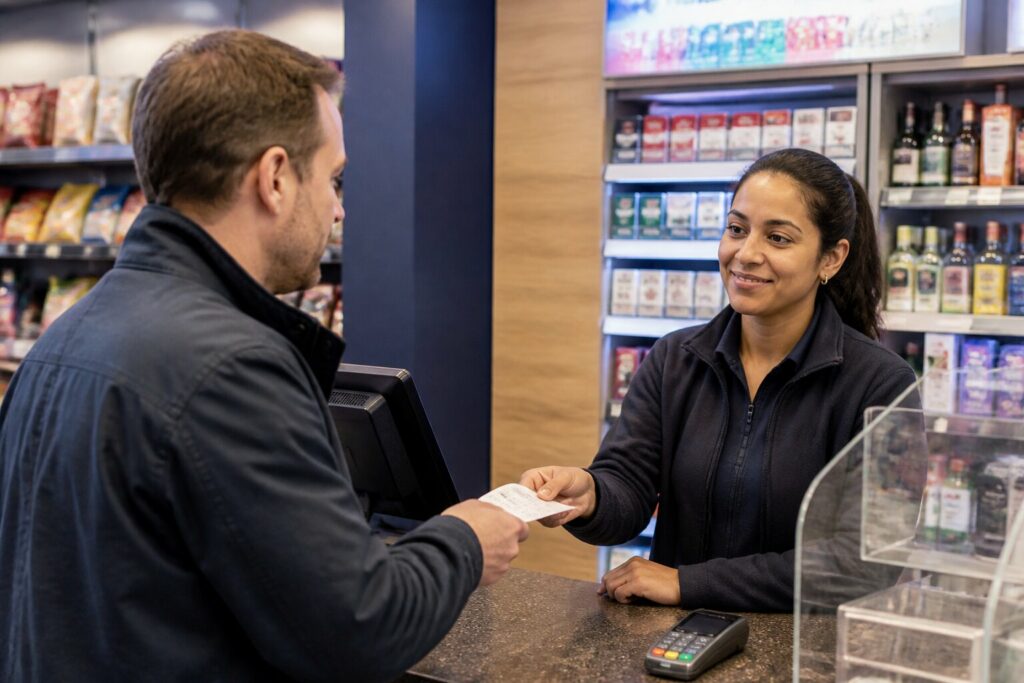
The in-store purchase process is straightforward and handled through the retailer’s lottery terminal. First, pick up a play slip from the stand near the counter if you want to mark specific numbers; alternatively, ask the cashier for a random selection and they will enter it for you.
Hand over your completed slip or tell the cashier your preference, pay for the entry and the terminal will print a ticket showing your numbers, draw date and the amount paid. Keep this printed ticket safe, as it acts as the only accepted proof of entry when claiming prizes.
The printed ticket and the terminal’s records ensure the same secure process applies to in-store purchases as to other sales. With the basics covered, the next section looks at why some people stick with buying tickets in person.
Why Choose In-Store Lottery Purchases Over Online?
Buying in person suits people who value a simple, familiar routine. Some prefer speaking to a cashier for confirmation or help, or like holding a physical ticket to check later. Paying with cash also removes the need for online accounts or card authorisation, which appeals to those who prefer direct control over spending.
Visiting a shop to buy a ticket can also create a natural pause that helps some people keep play moderate. Retail staff check age where required and follow the operator’s procedures, which contributes to a secure purchasing environment. If you prefer the in-person experience, the next practical matter is what ID you might be asked for.
What Identification Do You Need to Buy Lottery Tickets?
You must be at least 18 to buy lottery tickets in a shop. Retailers are required to verify the age of anyone who looks under 25, and they will ask for a form of photo ID when necessary. It is an offence for a retailer to sell a ticket to someone under 18, so staff have to be certain before completing the sale.
Acceptable ID commonly includes a passport, driving licence or a PASS-accredited proof of age card. Photographic ID with a clear name and date of birth is preferred, and some retailers may also accept other government-issued documents that meet these criteria. If you cannot provide valid identification when requested, the retailer will not be able to sell you a ticket.
Having suitable ID ready keeps the transaction quick and ensures compliance at the point of sale. If you usually buy tickets online, providers will use account verification and may ask for digital copies of ID to confirm your age before allowing purchases.
Payment Methods Accepted for Lottery Tickets
Cash is the most widely accepted way to pay for tickets in store, and many retailers also accept debit cards, including contactless payments. Credit cards are not permitted for lottery purchases, in line with regulations designed to prevent spending beyond one’s means. Some retailers may also accept payment via mobile banking apps where these are linked to a debit card, but acceptance can vary between shops.
Some shops may have particular preferences for how they process refunds or payouts, so if you rely on a specific payment method it can help to check with the retailer. This is especially relevant if you are expecting a refund or a prize payout, as some outlets may require you to return with the original ticket or to collect winnings in a particular way.
With payment sorted, the rules about who may buy a ticket are equally straightforward. You should always check local retailer policies before purchasing if you are unsure about payment or refund arrangements.
Are There Any Age Restrictions for Buying in Store?
All lottery products sold in shops are restricted to people aged 18 and over. This legal limit covers draw entries and scratchcards alike, and retailers enforce it through age checks for customers who appear under 25. Customers may be asked to provide a recognised form of photographic ID, such as a passport or driving licence, to prove their age.
These checks form part of wider safeguards that licensed retailers follow to ensure products are sold lawfully and responsibly. Retail staff receive training on challenge and refusal procedures, and retailers can refuse a sale if they are not satisfied the buyer is of legal age. Failure to comply with these rules can lead to penalties for the retailer under gambling regulations.
Up next is how to check whether a ticket has won and what the claiming process looks like.
How to Check and Claim Your Winnings In Store
Checking and claiming winnings at a shop is designed to be secure and simple. The way a prize is claimed depends on its size, and the retailer will validate any ticket before paying out. Following the retailer’s instructions and the operator’s published procedures helps to ensure your claim is processed correctly and without unnecessary delay.
Ticket Checking and Validation
Take your ticket to a retailer that sells lottery products and the cashier can scan it on the terminal to confirm whether it is a winner. Some shops provide self-service checkers for quick confirmation before you approach the counter; either option gives an instant result tied to the central draw records. If you are unsure about the process, staff can explain what the on-screen or terminal messages mean and what you should do next.
Collecting Smaller Prizes at the Shop
Shops are authorised to pay smaller prizes up to a specified limit in cash or, if available, as a refund to your debit card. The cashier will validate the ticket and complete the payout on the spot, so keeping your ticket safe until it has been checked is essential. Be prepared to show proof of identity if asked, and check the amount carefully on the receipt before leaving the counter.
Claiming Larger Prizes: What to Do Next
When a prize exceeds the shop’s payout limit, the retailer will provide information on how to claim via the operator’s official channels. This typically involves contacting the operator or visiting a designated claim centre and following the published claim process to ensure the payment is handled securely. The operator may require you to complete claim forms and provide identification, and they will explain any time limits for submitting a claim.
Knowing the correct route for claims helps avoid delays, and the guidance given at the till points you to the right next step. Keep any paperwork the retailer gives you, and follow the operator’s instructions carefully to ensure the claim proceeds smoothly. The following section explains what happens if a physical ticket goes missing.
What to Do If You Lose a Physical Lottery Ticket
A physical ticket is generally required to claim a prize, so losing one can be problematic. If you suspect a winning ticket is lost, contact the lottery operator as soon as possible to report the situation and ask about any available lost-ticket procedures, which might include submitting a claim form and evidence. Evidence can include proof of purchase such as a store receipt, bank card statement or a witness statement, and the operator will explain what they can and cannot accept.
There is no guarantee a lost ticket can be settled without the original, so the safest approach is to store tickets securely until the draw and any claim have been completed. It is also good practice to sign the back of your ticket and keep a clear photocopy or photograph as a record, although copies are not a substitute for the original in most cases. Acting quickly and keeping any supporting documents will help if you need to follow up with the operator or retailer.
Health and Safety Measures in Stores
Retailers maintain basic health and safety standards around the sale of lottery products. This can include keeping counters and terminals clean and disinfected, providing clear queuing guidance during busy times, and ensuring staff receive training on how to operate lottery equipment and handle transactions securely. Well-maintained equipment and tidy serving areas reduce risks and help staff serve customers efficiently.
Shops may also display information about player support and helplines so customers can easily access help if they need it. Clear signage and leaflets about responsible play and support services make it easier for people to find help, while discreet placement of contact details helps protect customers privacy.
Together, these measures contribute to a safer shopping experience and make it easier to buy and check tickets calmly. They also support staff in managing busy periods and ensuring transactions are handled appropriately and safely for everyone involved.
Do All Stores Stock Every Lottery Game?
Not all retailers carry the full range of lottery products. Larger stores with dedicated terminals and more shelf space are generally more likely to offer a broader selection of national draws, local games and instant-win cards. Smaller outlets, meanwhile, may focus on the most popular items and best sellers, or limit their offering due to space, staffing or demand.
If you need a particular game, asking a member of staff in-store or looking for display signs that list available products will usually save time. Some retailers also keep separate racks or tills for scratchcards and have notices showing which draws they can sell. Checking a retailer’s website or using official lottery location tools before you visit can help avoid disappointment.
The final section dispels common misunderstandings so you know what to expect when you buy tickets on the high street. It covers how product availability can vary by location, why some games are only sold at certain outlets and what actions you can take if a retailer does not stock the game you want.
The Odds Are Not Better In-Store
A frequent misconception is that buying a ticket from a particular shop improves the chances of winning. In reality, each entry is treated the same by the operator, and odds do not differ by point of purchase.
Shops Don’t Receive Special Winning Tickets
Tickets and scratchcards are distributed without favour to specific retailers. The allocation process and draw mechanism are designed to be fair and consistent across all points of sale.
Age and Identification Rules Apply Everywhere
Age-verification procedures are applied uniformly, regardless of a shop’s size or location. Retailers follow the same legal obligations to check ID where required, ensuring the rules are enforced equally across the high street.
Understanding these points helps set realistic expectations and makes the in-store experience clearer from purchase to claiming any prize. Whether you buy tickets as part of a routine errand or a spontaneous visit to the shop, the process remains accessible and regulated at every step, leaving you with a straightforward route to play and claim if you win.
**The information provided in this blog is intended for educational purposes and should not be construed as betting advice or a guarantee of success. Always gamble responsibly.