
Online Slots vs Real Slots: Pros, Cons & Differences Explained
Ever wondered whether spinning the reels online or playing in a real casino gives you the better experience? With so many slots at your fingertips and classic machines still filling casino floors, it’s easy to feel torn.
Both online and real slots offer entertainment and the opportunity to win, but they differ in how they feel, what they offer and how you play. This article breaks down the key differences, advantages and drawbacks so you can decide which suits you best.
Keep reading — each section covers a different angle, from how the games operate to payout rates and the social side of playing.
What Are the Main Differences Between Online Slots and Real Slots?
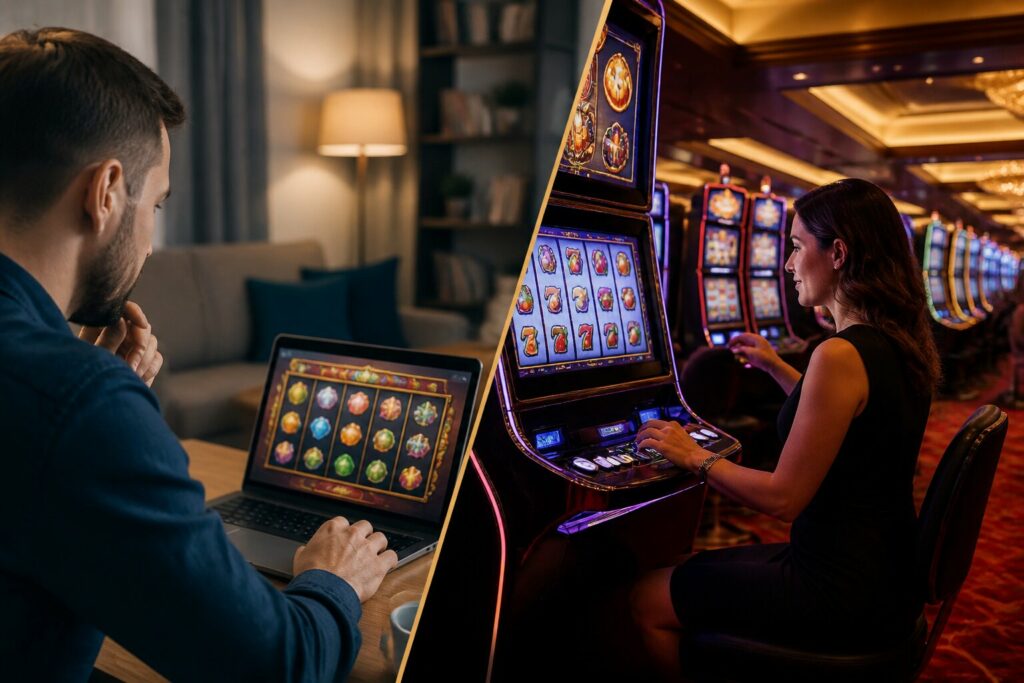
The most obvious difference is location: online slots are played on a phone, tablet or computer; real slots are found in casinos and betting shops. That affects everything from opening hours to how you pay.
Convenience is a major factor. Online play is available 24/7 without travel or queues. In contrast, a visit to a venue requires time, travel and sometimes waiting for a free machine. Accessibility follows the same pattern: signing up online takes minutes, whereas a trip out can involve transport and planning.
Choice and variety diverge sharply. Online sites can host hundreds or thousands of titles because they aren’t limited by floor space. Brick-and-mortar venues offer fewer machines and tend to keep proven favourites.
Finally, payment methods differ. Online play uses cards, digital wallets and other e-payments, while physical machines accept cash or printed tickets. These differences shape the feel of a session as much as the games themselves.
How Do Online Slots Work Compared to Real Slots?
Both online and many modern real-slot machines use a Random Number Generator (RNG). The RNG is a certified piece of software that produces numbers to determine each spin’s outcome so results are unpredictable and independent of past spins.
Older mechanical machines use internal mechanisms to determine symbol stops; these were engineered to provide randomness through their physical design. Today, most contemporary machines in venues use digital systems and RNGs similar to online games, so the underlying process is closely aligned across formats.
Independent testing bodies regularly check both online and land-based games to verify that RNGs and payouts meet regulatory standards. This ensures consistent technical fairness across formats, even if the hardware or setting differs.
Pros & Cons of Playing Online Slots
Online play brings distinct benefits and a few drawbacks worth weighing up.
Pros:
- You can play anywhere with an internet connection and at any hour, which suits busy schedules.
- Game libraries are extensive, covering many themes, mechanics and bonus features.
- Demo modes let you try titles without spending money, and most sites provide tools such as deposit limits and session reminders to help you manage play.
Cons:
- The constant availability can make sessions feel longer than intended, so it’s wise to decide limits in advance.
- The experience lacks the in-person atmosphere of a casino, which some players prefer.
- Digital payments can make it easier to lose track of spending compared with handling cash. Regularly checking balances and using site controls helps maintain oversight.
Pros & Cons of Playing Real Slots
Playing on the casino floor is a different kind of experience, with its own advantages and trade-offs.
The atmosphere of a venue — the sound of machines, the tactile controls and the presence of other players — creates a sensory experience many enjoy. Staff are on hand for questions or assistance, and using cash can feel more immediate and tangible for tracking spending.
On the other side, visiting a venue requires time and planning, and floor space limits the number of games available. Casinos have set opening hours and popular machines can be busy. These practicalities mean a visit is often a deliberate outing rather than a quick play.
Spending may be easier to manage for some when working with cash, but it still needs attention. If gambling stops being social and becomes driven by chasing returns, it’s time to pause and reassess.
What About the Social Experience?
The social element is a strong reason some players choose land-based venues. Conversations with fellow players, celebrating a win with friends or simply being part of the floor environment add to the outing’s enjoyment.
That said, social play doesn’t suit everyone. Some players value the quiet and privacy of online sessions. If interaction matters, a venue offers direct contact; if it doesn’t, online options provide control over the setting.
How Does Payout Rate Differ Between Online and Real Slots?
Payout rates are expressed as Return to Player (RTP), a theoretical percentage indicating average returns over a long period. For example, an RTP of 95% suggests that, across many spins, £95 would be returned from every £100 wagered on average. It is not a prediction of individual sessions.
Online slots often show higher RTPs, commonly between 94% and 98%, because developers can offer a range of games with different math models. Physical machines in venues sometimes have lower RTPs, often due to operator settings and the need to cover venue costs; these can range from around 85% to 94% depending on the title and location.
Licensed operators must disclose RTPs and allow independent testing. Use RTP information to choose games that match your preferences, while remembering that short-term results will vary.
Is There a Difference in Game Variety?
Yes. Online platforms host vast libraries, allowing providers to explore niche themes, experimental mechanics and frequent releases. Developers can add new titles quickly, so the online catalogue keeps expanding. Players will often find a wider range of variants, from classic formats to highly specialised or themed options.
Land-based venues are constrained by space and tend to stock proven titles that appeal to a broad audience. Floors are refreshed periodically, but the overall selection remains smaller and usually focused on crowd-pleasers. Physical sites may emphasise popular brands and high-turnover games to make the best use of limited machine or table availability.
There are also practical differences that influence variety:
- Online libraries can include thousands of titles, frequent updates and jackpot or feature variants that would be impractical in a venue.
- Brick-and-mortar locations offer tangible, social experiences and may feature exclusive tables or mechanically unique games that work better in person.
- Accessibility differs: online players can filter, while visitors to a venue see what is available on the day.
Both online and physical games in regulated markets undergo testing, so variety does not equate to lower standards. Regulation and independent testing bodies ensure games meet fairness and safety requirements, regardless of format. Your choice between formats will usually come down to the types of games you prefer and the experience you want.
Are Online Slots or Real Slots Safer to Play?
Safety largely depends on choosing licensed and regulated operators. Platforms and venues subject to regulation are monitored for:
- fairness
- security
- player protection measures
Online sites use encryption and privacy protocols to protect personal and financial details. They also offer account tools to help manage play, such as:
- deposit limits
- session time limits and reminders
- self-exclusion and cool-off options
Physical venues employ staff trained to identify signs of problem gambling and to offer support. In bricks-and-mortar settings you can usually access:
- on-site assistance from staff
- exclusion schemes
- advice on where to get further help
If you are unsure about where to play, check licence details and the operator’s published safety measures before you start. Support services such as GamCare and BeGambleAware are available for confidential help if you need it.
What Are Common Myths About Online and Real Slots?
There are several persistent myths around slot play, but reliable information helps separate fact from fiction.
One frequent misconception is that a machine is “due” to pay after a run of losses. In reality, each spin is independent; outcomes do not follow a predictable pattern based on recent results. Another myth is that times of day or stake size influence a machine’s likelihood to pay; regulated RNGs and machine mechanics do not change behaviour in response to these factors.
Concerns that online games can be manipulated by operators are unfounded when playing with licensed providers, because independent testing ensures games meet strict standards. If doubts arise, checking a game’s testing certificates and RTP disclosures can provide reassurance.
Which Should You Choose: Online or Real Slots?
The right choice depends on what you value in a session. If convenience, variety and flexible hours matter, online slots are likely a better fit. If you prefer a hands-on outing with social interaction and the atmosphere of a casino, real slots offer that experience.
Consider how you like to spend your time, how you want to manage money and whether social features are important. Make use of the protections and tools offered by licensed operators in either setting, set personal limits before you start, and treat play as entertainment rather than a way to generate income.
Whichever format you choose, informed decisions and sensible limits help keep play enjoyable and sustainable.
**The information provided in this blog is intended for educational purposes and should not be construed as betting advice or a guarantee of success. Always gamble responsibly.