EuroMillions: How Many Numbers Needed to Win a Prize or Jackpot?
EuroMillions draws might seem straightforward, but the mix of main numbers and Lucky Stars creates several prize levels. It is common to wonder how many numbers are needed to win a prize, and what it takes to claim the jackpot.
This blog post explains the prize structure in plain terms: the minimum match for any return, the exact combination for the top tier, how the twelve tiers work, the odds for each, and how Lucky Stars affect outcomes. You will also find how prizes are funded and shared, with clear examples of typical winning lines.
Play only if it fits your budget and circumstances.
How Many Numbers Do You Need To Win A Prize?
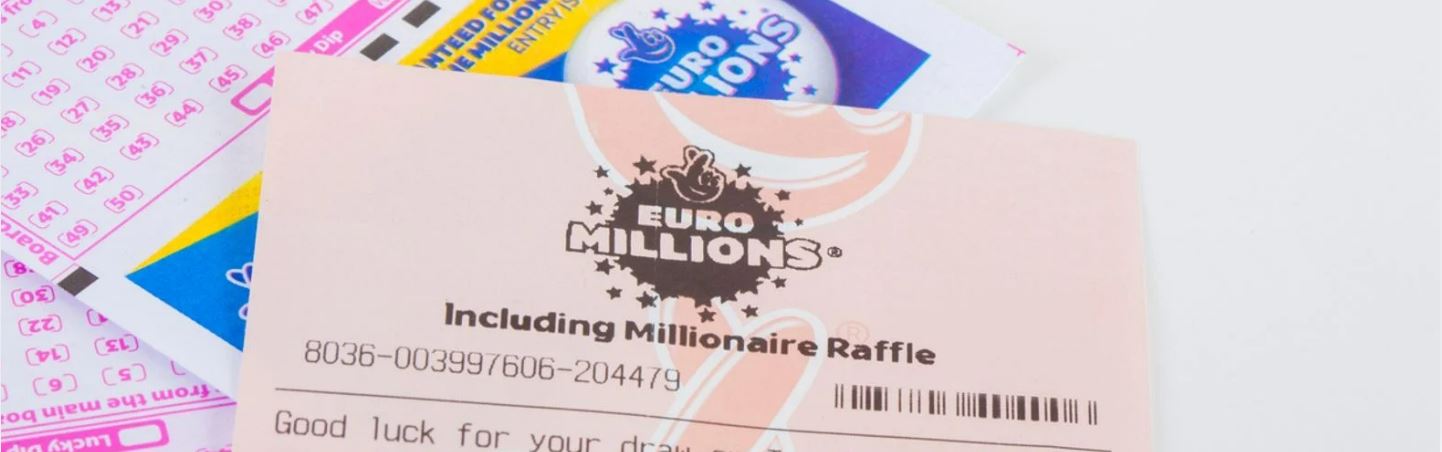
In EuroMillions, players select 5 main numbers and 2 Lucky Stars. Prizes are awarded for a range of matches across those two sets.
The minimum for a return is matching 2 main numbers, which usually pays around £2.50. As more numbers are matched, amounts tend to rise, especially when a Lucky Star is included. For example, matching 2 main numbers plus 1 Lucky Star often pays about £3.60, while 1 main number plus both Lucky Stars is typically around £4.30.
There are twelve prize tiers in total, starting from 2 main numbers matched and building up to the jackpot at 5 main numbers plus both Lucky Stars.
How Many Numbers Are Needed To Win The Jackpot?
To win the EuroMillions jackpot, a line must match all 5 main numbers and both Lucky Stars in the same draw. This is the only combination that qualifies for the top prize. Any other match falls into one of the lower tiers.
Now that the target is clear, it helps to see how the rest of the tiers are arranged.
EuroMillions Prize Tiers And Winning Combinations
EuroMillions has twelve main prize tiers. They range from the top tier of 5 main numbers plus 2 Lucky Stars, down through 5 plus 1, 5 plus 0, and then combinations involving 4 or 3 main numbers with different Lucky Star outcomes. Lower tiers include 2 main numbers on their own, 2 with a Lucky Star, and even 1 main number with both Lucky Stars.
A player matching 2 main numbers qualifies for a prize even if no Lucky Stars are matched. Adding a Lucky Star at most levels generally leads to a higher payout than matching the same count of main numbers alone.
UK tickets also include entry into the UK Millionaire Maker, which creates a separate chance to win a guaranteed £1,000,000 on the same draw night.
Understanding the tiers sets up the next question: how likely is each outcome?
What Are The Odds For Each Prize Tier?
Each tier has fixed odds based on the number of main numbers and Lucky Stars that must be matched. The jackpot, for matching 5 main numbers and both Lucky Stars, is approximately 1 in 139,838,160. For 5 main numbers and 1 Lucky Star the odds are about 1 in 6,991,908, and for 5 main numbers without any Lucky Stars they are roughly 1 in 3,107,515.
The chances increase for the lower prize tiers. For instance, the odds of winning with 2 main numbers are about 1 in 22. The overall chance of winning any EuroMillions prize is about 1 in 13.
The UK Millionaire Maker has its own odds, as it is a separate raffle-style game linked to the number of tickets entered on the night.
With the likelihoods in mind, it is worth looking at why Lucky Stars matter so much to both the top and middle tiers.
Play Slots & Online Casino Games


How Do Lucky Stars Affect Your Chances?
Lucky Stars are a second set of numbers, chosen alongside the 5 main numbers. They play a key role in shaping outcomes across the tiers.
At the top end, both Lucky Stars are required for the jackpot, which is why that result is so rare. In the next-highest tiers, at least one Lucky Star is often part of the winning combination. Further down the table, landing a Lucky Star alongside matched main numbers usually leads to a higher return than matching the same count of main numbers on their own. They do not just unlock the top prize; they also create extra pathways to mid and lower-tier payouts.
Once you know how results are formed, the next step is understanding how the prize fund is split on the night.
How Are Prizes Calculated And Shared Among Winners?
EuroMillions prize money comes from a share of ticket sales that is allocated across the tiers by set percentages. The amount paid for each tier on a given night depends on how many tickets are sold and how many winners there are in that tier. This is why published amounts are usually described as typical or estimated rather than fixed.
If more than one ticket wins the jackpot in a draw, the top prize is shared equally between them. The same principle applies to the other tiers, where the portion of the prize fund for that tier is divided among all winners at that level. If no ticket wins the jackpot, it can roll to the next draw in line with the game rules and jackpot cap.
The UK Millionaire Maker works differently. It is a separate draw, and the prize is a fixed £1,000,000 awarded to the winning code.
A few real-world examples help to show how this looks in practice.
Examples Of Winning Combinations And Typical Payouts
Here are some typical outcomes, based on recent prize breakdowns. Exact amounts vary from draw to draw.
A line with 3 main numbers and 1 Lucky Star may return around £7.30. Matching 4 main numbers and 2 Lucky Stars could pay about £844.70. If someone matches 2 main numbers, the usual prize is roughly £2.50. Even 1 main number together with both Lucky Stars may secure around £4.30.
For higher prizes, matching 5 main numbers and 1 Lucky Star often results in a six-figure sum, such as £130,554.30. The jackpot is won by matching all 5 main numbers and both Lucky Stars, with the actual amount driven by ticket sales, rollovers and any cap in place.
If you choose to take part, set sensible limits that suit your circumstances and keep play occasional. If gambling starts to affect your well-being or finances, seek support early. Independent organisations such as GamCare and GambleAware offer free, confidential help.
**The information provided in this blog is intended for educational purposes and should not be construed as betting advice or a guarantee of success. Always gamble responsibly.