
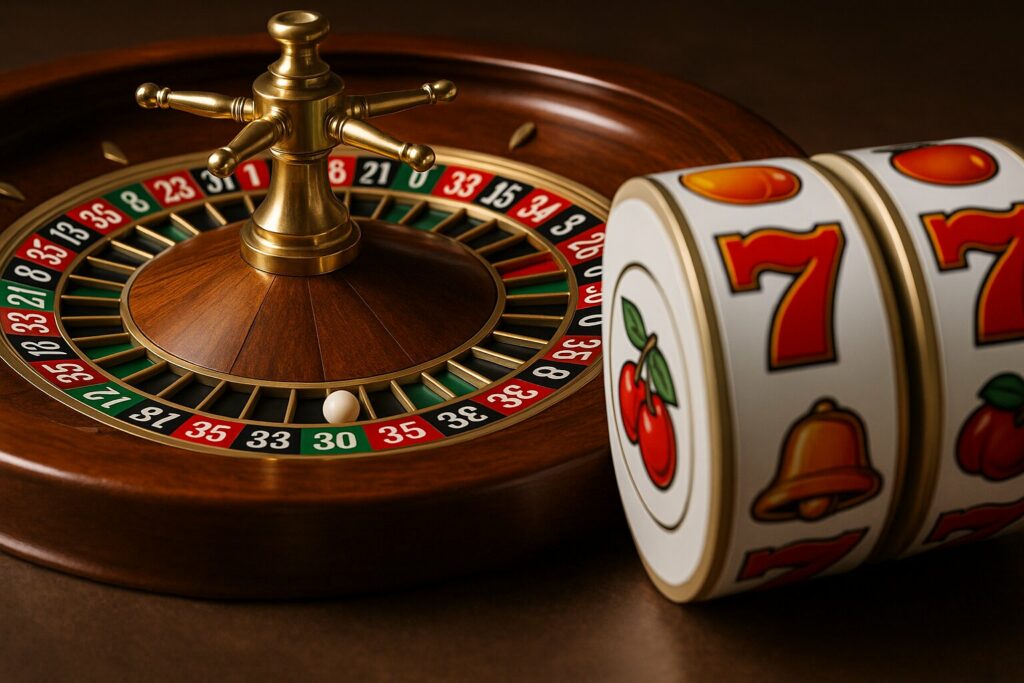
How Many Numbers Are There on a Roulette Wheel? Slots Explained
Roulette is one of the most recognisable games in any casino, but have you ever wondered how many numbers are actually on that spinning wheel? Understanding the wheel’s layout can make the game clearer and help you make more informed choices about the bets you place.
This article explains the main wheel types, why their pockets differ, how those differences affect play, and how roulette compares to slot machines. Read on for a straightforward look at the numbers that shape each game and what they mean for your experience. Please play within limits you set for yourself and take breaks when needed.
What Types of Roulette Wheels Exist?
There are three main types of roulette wheels you will encounter: European, American, and French. Each wheel has a distinct pocket arrangement and a slightly different feel at the table.
The European roulette wheel has 37 pockets: numbers 1 to 36, plus a single zero (0). The numbers alternate in red and black, while the zero is green.
The American wheel has 38 pockets: numbers 1 to 36, a single zero (0), and a double zero (00). Both zero pockets are coloured green. The extra pocket changes the numerical balance on the wheel and alters the odds compared with the single-zero version.
The French wheel uses the same 37-pocket layout as the European wheel, but tables often offer additional rules such as “La Partage” or “En Prison” that can reduce the effective house advantage on even-money bets. Those rules apply to bets rather than to the wheel’s count of numbers, but they affect how the game plays out.
Each wheel’s pocket count and any table rules together determine the structure of bets and the mathematical edge the casino holds. That matters because it affects the likely long-term returns on different bet types.
Why Do Roulette Wheels Have Different Numbers?
The variations in pocket numbers reflect how roulette evolved in different places. The single-zero format traces back to early French versions of the game, and that layout spread across Europe. When the game was adapted in the United States, the double-zero pocket was added, which became a defining feature of the American variant.
Beyond history, the difference in zeros has a clear mathematical effect. A single zero wheel gives the house one source of advantage: the zero removes certain even-money returns that would otherwise balance out. Adding a double zero increases that house advantage further because there is one more pocket that pays to the house but not to player bets that exclude the zero pockets.
The choice of wheel is therefore not just tradition; it changes the odds facing players and can influence which bets look most attractive depending on the rules at the table.
How Do The Numbers Influence Gameplay?
The number and arrangement of pockets shape the available bets and the house edge you face on each spin. Most standard bets exist on all wheels—single-number bets, splits, streets, corners, columns, dozens, odd/even, and red/black—but the presence of one or two zero pockets affects the payout mathematics.
For example, a straight-up bet on a single number typically pays 35 to 1. On a European-style wheel with 37 pockets, the implied return from that payout and the probability of hitting the number produce a specific house edge. On an American wheel with 38 pockets, the extra double zero slightly increases the house edge because the probability of any single-number win is lower while the payout remains the same.
Even-money bets such as red/black or odd/even are influenced the same way. On a single-zero wheel, rules like “La Partage” can return half a lost even-money stake when the ball lands on zero, lowering the effective house edge on those bets. Such nuances are tied to wheel design and table rules rather than to player activity.
Understanding how the pocket count and table rules interact helps you see why some bets offer better expected value than others. That context can guide decisions about which bets to favour if you want to manage variance and the likely long-term return.
What Is the Difference Between Roulette and Slots?
Roulette and slots differ in format, interaction, and how each produces outcomes. Roulette is a table game with a fixed set of betting options tied to the wheel’s numbered pockets. The wheel and layout create a finite catalogue of possible results per spin, and players place bets against those specific outcomes.
Slots use digital or mechanical reels with symbols and paylines. Modern electronic slots rely on a random number generator to determine which symbols appear on each spin, with payouts set by the game’s configuration. Slots often offer more varied features such as bonus rounds, free spins, and progressive jackpots, leading to a wider spread of possible outcomes and payout structures.
Another practical difference is the social aspect. Roulette typically involves a dealer and other players around the table, creating an interactive environment. Slots are often solitary, letting each player set their own pace and stake size. Both types of game are designed with randomised outcomes and predetermined payout structures, so the experience each provides is different rather than one being inherently better.
Common Misconceptions About Roulette Wheels and Slot Machines
There are several persistent misconceptions that can cloud how people think about these games. Clearing them up helps set realistic expectations and promotes safer, more informed play.
“Past results affect future spins.”
Every spin of the wheel or slot reel is independent. Results are not influenced by previous outcomes, so there is no pattern to exploit based on past spins.
For electronic slots this independence is enforced by a random number generator. For physical roulette wheels the outcome of each spin is likewise independent, even if the wheel is mechanical. In both cases, past results do not change the mathematical odds of future events.
“There’s a skill to picking winning numbers or symbols.”
While players can use different betting patterns or manage bankrolls in various ways, the outcomes themselves are not subject to player skill. Betting choices influence variance and exposure, but they do not change the underlying probabilities.
What players can control are non-outcome factors such as:
- bet size and how long a session lasts,
- which types of bets to place to match risk tolerance,
- how to manage stake levels to avoid overspending.
These controls help manage experience and potential losses but do not increase the chance of winning a spin.
“Machines or wheels are ‘due’ for a win.”
Neither slot machines nor roulette wheels keep track of past results in a way that would make them more or less likely to produce a win after a run of losses. Each event is an independent occurrence, so the concept of being “due” is a misunderstanding of probability.
Apparent runs of wins or losses are natural random variance. Over time, the house edge or the game’s return-to-player (RTP) percentage governs long-term outcomes rather than any short-term streak.
“All slot machines or roulette wheels are the same.”
Games differ in rules, payouts, and features. For roulette, wheel type and table rules create important differences; for slots, volatility and return-to-player percentages vary between games. Knowing the specific rules and payout profiles helps you understand what to expect from a given game.
Look for information such as:
- whether a roulette game is European, American or French,
- table rules like en prison or surrender,
- slot volatility and published return-to-player (RTP) figures.
If you want to focus your play, learning these distinctions will help you choose games and bets that suit your preferences and limits. Always check game rules before you play and set clear personal limits to keep play enjoyable and responsible.
Conclusion: Understanding Roulette Wheel Numbers vs Slot Machines
Knowing how many numbers are on a roulette wheel is more than trivia. The presence of a single zero or an extra double zero changes the mathematical balance of bets, and table rules can further alter the effective returns on certain wagers. Slots work differently, with symbol-based reels and programmed payout structures that create different risk and reward profiles.
Both forms of gaming are governed by random outcomes and fixed payout rules, so understanding the structure of each game is the best way to make choices that match your goals and comfort level. Set sensible limits, stick to them, and enjoy the experience with clear expectations about how the games operate.
**The information provided in this blog is intended for educational purposes and should not be construed as betting advice or a guarantee of success. Always gamble responsibly.