

House Edge Explained: What Is The House Edge in Online Casinos?
Understanding how online casinos operate is useful for anyone who wants to play with a clear idea of what to expect. One core concept behind every game is the house edge.
This blog post explains what the house edge is, how it is worked out, and why it differs from RTP. You will also see typical figures for popular games, how the house edge can affect a playing budget and session length, and when strategy or bonuses might change the overall value of play.
Along the way, you will find practical pointers on where to check accurate information and a short section tackling the most common myths, so you can make informed choices from the start.
How Is House Edge Calculated?
The house edge is a percentage that reflects the casino’s statistical advantage built into a game’s rules and pay-out table. It compares the true odds of an outcome with what the game actually pays.
A simple way to view it is through expected return. If, in the long run, a game pays back £97 for every £100 wagered, the house edge is 3%. On average, £3 out of each £100 staked remains with the casino.
Every game has its own house edge shaped by its design. Developers model the maths and test extensively so the pay-outs line up with the intended edge. Although this percentage describes long-term performance across many plays, short sessions can swing either way.
With that foundation in place, it helps to see how this idea relates to RTP.
What Is The Difference Between RTP And House Edge?
RTP, or Return to Player, is the theoretical percentage of total stakes a game returns over a very large number of plays. A 96% RTP means that, averaged over time, £96 is paid back for each £100 staked.
House edge is the mirror of RTP. If RTP is 96%, the house edge is 4%. Together, they add up to 100%. It is worth noting that some games, especially slots, may exist in several RTP versions, so the figure shown in one place might differ from another version of the same title.
These percentages describe long-term behaviour rather than predicting any single spin or hand. Results over a short session can be higher or lower than the stated figures.
Knowing the broad difference makes it easier to compare games side by side.
Typical House Edge For Popular Casino Games
Different games carry different edges, largely dictated by their rules and pay tables, and some variants tweak these numbers.
Slot games often sit somewhere between about 2% and 10% house edge, depending on the title and version. The pay-table structure and any bonus features influence where a slot falls within that range.
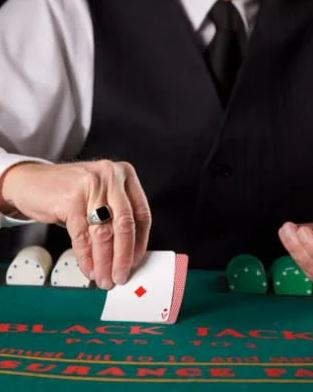
Blackjack can be among the lower-edge games when played with basic strategy, often around 0.5% to 1%. Rule details matter: a 3:2 pay-out for a natural blackjack is usually better for the player than 6:5, and rules on doubling, splitting, and the number of decks can all shift the edge.
Roulette varies by wheel. European roulette, with a single zero, typically has a 2.7% house edge. American roulette, with an extra double zero, usually rises to about 5.26%. Some European-style rules, such as la partage or en prison on even-money bets, can trim the effective edge further.
Baccarat’s main wagers are relatively tight: the banker bet is typically just over 1% due to commission, while the player bet is slightly higher. Many side bets carry a much larger edge.
Craps offers a spread. Core bets such as pass line or don’t pass are around 1.4% and 1.36% respectively, while certain proposition bets can be far higher. Taking free odds behind qualifying bets pays at true odds, which reduces the overall edge on the combined wager.
Comparing these figures sets realistic expectations before starting a session and leads naturally to the next question: How might this affect a budget in practice?
How Does House Edge Affect Your Bankroll And Session Length?
House edge influences how far a budget might stretch over time because it shapes expected loss relative to total turnover. A handy rule of thumb is that expected loss equals total amount wagered multiplied by the house edge. For example, staking £1 per spin for 500 spins is £500 in total wagers. At a 4% edge, the long-run average loss would be about £20.
Of course, averages smooth out over very large numbers of plays. In the short run, volatility can lead to swings above or below that expectation. Game pace and bet size matter too. Faster play and larger stakes increase turnover, which can shorten a session; slower play and modest stakes usually help funds last longer.
Setting personal limits on time and spend, and taking breaks, can keep sessions manageable and enjoyable.
With the budget picture in mind, the next consideration is whether players can influence the edge at all.
Can You Reduce The House Edge?
The house edge is built into each game, and it cannot be removed. That said, some decisions can affect how closely a player’s results align with the lower end of a game’s theoretical edge.
In blackjack, using basic strategy for the specific rules in play helps minimise mistakes that raise the edge. In video poker, choosing a favourable pay table and making the mathematically sound hold/discard choices lowers the edge compared with casual play. In craps, taking free odds alongside a qualifying bet reduces the overall edge on the combined wager because the odds portion pays at true odds. These approaches do not generate an advantage, but they avoid giving up extra ground.
By contrast, games such as roulette or most slots do not offer decisions that change the built-in edge. Choosing versions with more favourable rules, or games known for lower edges, is the straightforward way to keep that percentage down.
Bonuses are another factor people often look to for extra value, so it helps to understand how they affect the overall picture.
How Do Casino Bonuses Change The Effective House Edge?
Bonuses like deposit matches or free spins can extend play or add extra funds, which changes the value of a session when all conditions are met. The underlying house edge of each game, however, does not change.
The key is in the terms. Wagering requirements set how much must be staked before a withdrawal is possible. Game weighting often means only certain games contribute the full amount towards those requirements, while others contribute less or not at all. There may also be maximum bet limits while a bonus is active, expiry dates, caps on convertible winnings, or restrictions on low-risk betting.
When these factors are combined, the effective value of a bonus depends on how realistic it is to meet the terms within the time allowed. If the conditions suit the way someone plays, a bonus can lengthen a session and add more outcomes. If not, the benefit may be limited. Either way, the game’s built-in edge remains the same.
If you are weighing up a bonus on our site, check the full terms first so you know exactly how it fits your budget and playstyle.
Where Can I Find The House Edge Or RTP For An Online Game?

Most online casinos display RTP or house edge details in the game’s information section, help screen, or pay table. For slots, this is often shown on the start screen or in the rules menu provided by the developer.
Table games such as blackjack, roulette, or baccarat usually include an explanation of the rules and the corresponding theoretical return. If figures are not obvious, the casino’s help pages or customer support can point to the correct information.
It is also worth checking that the figure applies to the exact version you are playing. Some slots are released with multiple RTP settings, and different operators may choose different versions. Independent game sheets or testing certificates, when available, can provide further confirmation.
Verifying these details before you play gives a clear view of what to expect. With that clarity, it is easier to steer clear of common myths.
Common Misconceptions About The House Edge
A frequent misconception is that the house edge dictates what will happen in any given session. In reality, it is a long-run average based on many plays. Short-term results can land either side of that average.
Another myth is that the edge moves around depending on recent outcomes. It does not. The edge is set by the game’s rules and pay-outs, so previous wins or losses do not alter it.
Betting systems are also sometimes believed to change the edge. They may reshape how a budget is used, but they cannot change the mathematics that gives the casino its built-in advantage.
Finally, some treat RTP and house edge as unrelated ideas. They describe the same relationship from different angles and always sum to 100%.
If you choose to play, keep it affordable and occasional. Never stake more than you can comfortably lose, and take breaks if you need them. If gambling starts to affect your well-being or finances, seek support early. Organisations such as GamCare and GambleAware provide free, confidential help.
**The information provided in this blog is intended for educational purposes and should not be construed as betting advice or a guarantee of success. Always gamble responsibly.