Slot Machine Winning Combinations Explained | Payouts & Paylines Guide
Ever wondered what really happens behind those spinning reels? Whether you’re a complete beginner or have played a few times, understanding slot payouts and paylines makes the game clearer and more engaging.
There’s more to slots than pressing “spin.” Knowing how winning combinations form and how different symbols pay out helps you read a game’s rules and play with confidence.
Get ready to uncover what paylines and pay table mean in practice. We’ll explain the mechanics so you can approach your next session informed and curious to learn more.
What Are Slot Machine Paylines and How Do They Work?
Paylines are the paths across the reels that determine whether the symbols you land form a recognised winning combination. When the reels stop, the game checks those paths against the payout table to see if a qualifying set of symbols appears.
Classic machines often show a single horizontal payline, but modern games can have many. These additional paylines run straight, diagonal, or in zigzag patterns, and some contemporary games replace fixed lines with “ways to win,” where matching symbols on adjacent reels form a combination regardless of precise positions.
Many games let you choose how many paylines to play. Selecting more increases the number of checked combinations each spin while raising the total stake. Checking the paytable before playing clarifies which paylines are active and how they affect bet size.
Understanding paylines helps you follow what the game is checking for on each spin and makes the payout table easier to interpret when you move on to a new slot.
Understanding Payout Tables on Modern Slots
A payout table, or paytable, lists the value of every symbol and explains how special icons behave. It shows the payouts for sets of matching symbols on active paylines and describes any bonus features, free spins, or multipliers.
Paytables for modern games often include diagrams of paylines or a brief animation showing how wins are formed. They explain wilds, scatters, and bonus triggers, and they may note whether certain features require a specific bet level to activate.
Taking a look at the paytable before you play provides clarity on what to expect from symbol combinations and how the game’s special features alter potential rewards. That context makes the calculations described next much easier to follow.
How Are Winning Combinations Calculated?
When the reels stop, the game compares the symbol positions to the active paylines and the paytable. If enough matching symbols fall along a recognised payline, the corresponding payout is awarded.
Each spin result is produced by a Random Number Generator, which ensures outcomes are impartial and follow the game’s programmed probabilities. The RNG makes each spin independent, and the game applies the paytable rules to determine any payout.
Payouts depend on the symbol values shown in the paytable, the number of symbols matched, and whether any special symbols like wilds are involved. The structure of paylines also matters, as some routes are easier to complete than others. All of these elements combine to produce the final prize for a successful combination.
Types of Slot Machines: Classic vs Video
Differences in Paylines and Payouts
Classic and video slots follow the same basic mechanics, but their presentation and complexity differ.
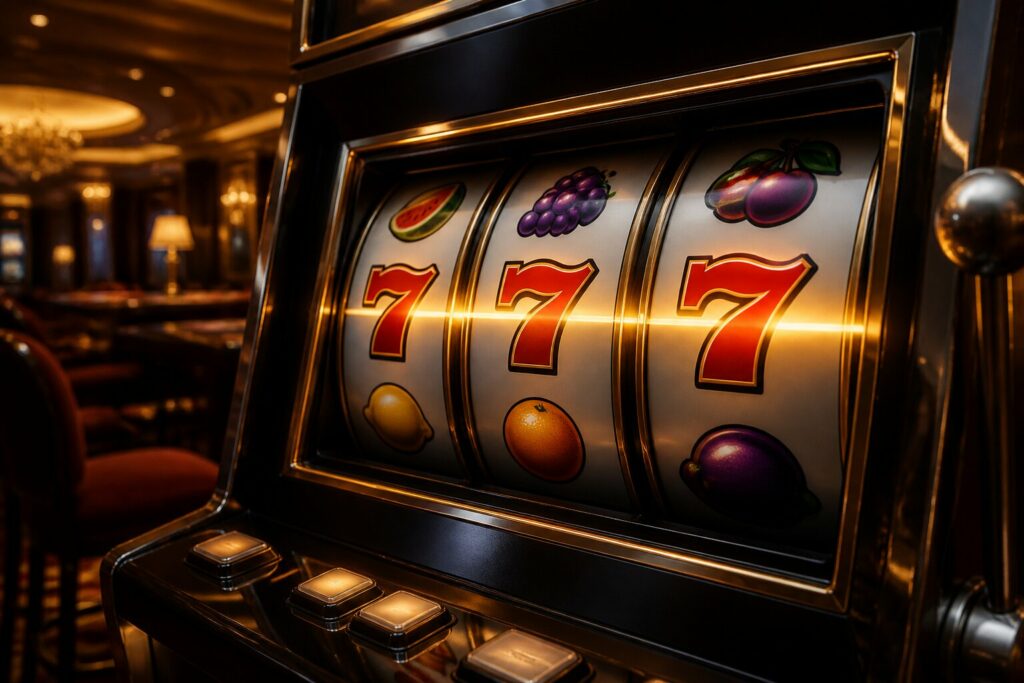
Classic slots mirror traditional fruit machines, usually with three reels and a small number of paylines. Their paytables are straightforward: a few symbols, simple combinations, and direct payouts.
Video slots typically have five or more reels and offer many more ways to win. They include richer themes, more symbol types, and a greater variety of special features such as expanding wilds, cascading reels, and multiple bonus rounds. Those added mechanics can change how combinations form and how prizes are awarded.
The differences affect both the frequency and variety of payouts. Classic games tend to be simpler and more predictable in structure, while video slots offer more varied outcomes because of their additional features and payline configurations.
If you prefer clarity and simplicity, classic formats deliver that. If you enjoy exploring multiple ways a combination can pay, video slots provide more to learn and experience.
Popular Symbols and Their Role in Winning
Symbols carry different values and functions, which the paytable defines. Standard symbols usually pay smaller amounts and appear frequently. High-value symbols show up less often but offer larger payouts when they match.
Wild symbols substitute for other regular icons to complete winning combinations, with some wilds also offering multipliers or expanding to cover an entire reel. Scatter symbols typically trigger features such as free spins or bonus games when a required number appear anywhere on the reels, rather than needing to align on a payline.
Bonus symbols or special icons may unlock a separate round or a prize game that works under different rules from the base game. Each game designs these symbols to fit its theme and mechanics, so consulting the paytable is the most reliable way to see their exact roles.
Knowing what each symbol does gives a clearer sense of how wins can form and what to watch for while the reels spin.
Why Do Some Combinations Pay More Than Others?
Game designers set payouts based on symbol frequency and the difficulty of completing certain combinations. Symbols that appear less often are usually linked to higher payouts, because rarer outcomes justify larger rewards.
The number of matching symbols matters as well; five matching symbols typically pay more than three. Some special symbols increase the payout by substituting for others or by multiplying a win. Paylines that are harder to complete may be balanced with higher rewards to reflect their lower probability.
All these rules are explicit in the paytable, which is why checking it is the clearest way to understand why some combinations are valued higher than others.
Progressive Jackpots: How Do They Affect Payouts?
Progressive jackpots grow as a portion of players’ bets is added to a shared prize pool. This fund accumulates until the jackpot is triggered by a particular event, such as a specific symbol combination or a bonus feature.
Some progressive networks link multiple games together, allowing the jackpot to increase faster. The likelihood of winning a progressive is small, but the resulting payout can be substantially larger than standard prizes. Games that offer progressives will explain the triggering conditions and any bet requirements in their paytable or rules.
Because the size of the progressive separates it from regular payouts, it’s helpful for players to be aware of how it works and how it fits into the broader payout structure of the game they are playing.
Common Myths About Slot Machine Winnings
Several persistent ideas about slot behaviour are incorrect, and it helps to be clear about why.
One myth is that machines remember past results and are “due” to pay after a dry spell. In reality, each spin is independent and governed by the RNG, so past outcomes do not influence future ones.
Another misconception is that specific strategies or patterns can reliably improve results. Since the outcome distribution is fixed by the game’s programming and the RNG, no system can alter the underlying probabilities.
Beliefs about particular times of day or other external conditions affecting payouts are also unfounded. Regulated games maintain their set behaviour continuously, so outcomes are consistent with the stated mathematics at all times.
Knowing these points helps keep expectations realistic and focussed on how the game actually operates.
How to Read Winning Combination Charts
Winning combination charts show which symbol matches count and what they pay. They typically list symbols and the payouts for three, four, or five-of-a-kind on active paylines, and they include brief notes about special symbols and bonus triggers.
Start by identifying a symbol on the chart, then read across to see the payout for different match counts. If the game uses ways-to-win rather than fixed lines, the chart will explain that system and how adjacent-reel matching works.
Charts that include diagrams for paylines or short animations make it easier to visualise how combinations form. Becoming comfortable with these charts removes uncertainty when you first try a game and makes clear what outcomes are being rewarded.
Responsible Gambling: Know the Odds and Limits
Slot play should be treated as entertainment with known odds and built-in limits. Outcomes are governed by the game’s mathematics and the RNG, so there are no guaranteed methods to increase returns.
Deciding in advance how much time and money to spend helps keep play within personal boundaries. Many platforms offer tools to set deposit limits, session reminders, and breaks that support staying within those decisions.
If gambling causes concern or starts to affect daily life, confidential support services are available. Organisations such as BeGambleAware and GamCare provide information and advice for anyone who needs it.
Keeping sessions measured and informed ensures the experience stays enjoyable and under control.
**The information provided in this blog is intended for educational purposes and should not be construed as betting advice or a guarantee of success. Always gamble responsibly.