
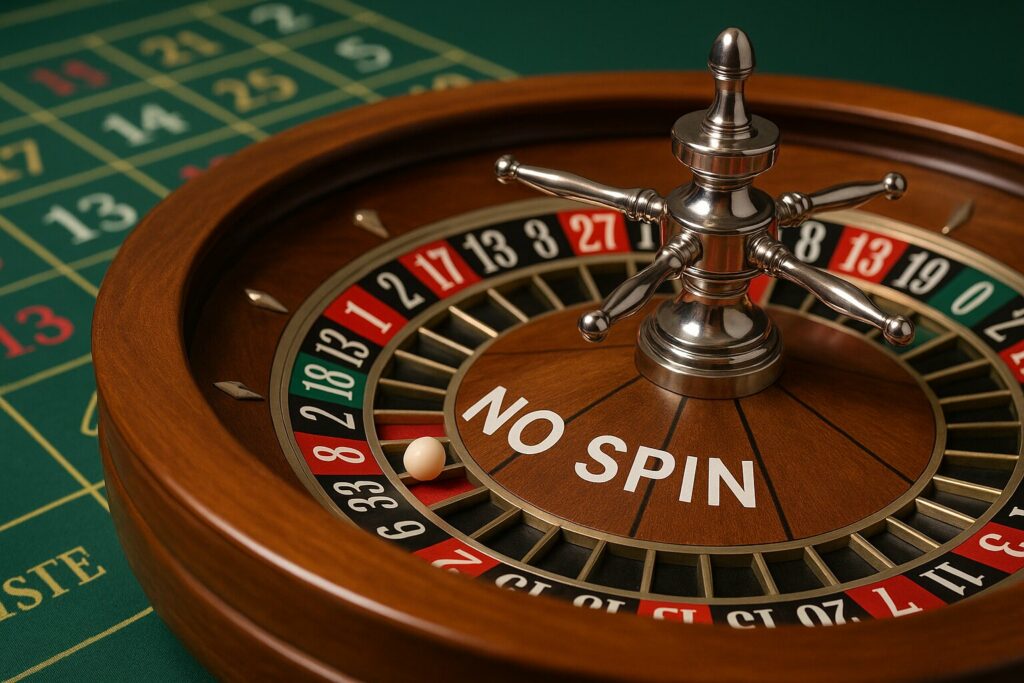
No Spin in Roulette Explained | No Spin Rules & Gameplay Guide
Ever noticed a roulette game pause just as anticipation was building? That pause is often down to the “No Spin” rule. It exists to make sure every spin is genuine and that results meet the standards set by regulators.
Knowing what “No Spin” means and why it happens helps players feel confident the game is fair and transparent. Read on to learn how the rule works, why dealers call it, and what follows at the table.
What Does “No Spin” Mean in Roulette?
“No Spin” is a simple way for the croupier to indicate that a particular spin will not count. The call is made when something interrupts the normal course of the wheel or the ball, so the outcome cannot be taken as valid. The croupier will normally stop the game, announce the no spin, and leave bets standing for the next valid spin.
Typical triggers include:
- the ball leaving the wheel before completing the spin,
- the ball not completing the required rotations, or
- the ball getting lodged or otherwise stuck.
When a spin is ruled invalid, the result is cancelled and bets remain in place for the next valid spin. In some venues the house rules may vary slightly, for example on how long bets are held or how stalled electronic wheels are treated, so it is sensible to check the table rules before you play.
Calling a no spin keeps play consistent and fair, and ensures payouts only follow trustworthy results. It is a routine part of table procedure designed to protect players and the integrity of the game.
When Do No Spin Results Occur at the Roulette Table?
A “No Spin” outcome arises whenever the conditions for a fair spin are not met. This decision is made by the croupier or the live-game operator when the spin cannot be judged as a proper, valid run. The ruling aims to ensure all players are treated fairly and that outcomes remain random and transparent.
Common examples include:
- the ball jumping out of the wheel mid-spin
- the ball making too few revolutions to be considered a proper run
- visible interference with the wheel or ball
Mechanical faults and technical problems in live-streamed games can also prompt a no spin. Examples of these issues include wheel imbalance, camera failure or frame freeze, faulty sensors, or other equipment malfunctions that affect the ability to determine a clear result.
When a no spin is declared, the spin is nullified and betting continues with the same stakes carried forward to the next valid spin. In many live games the table staff will also log the incident and, where available, review recorded footage to confirm the decision and keep a clear record for players and regulators.
These protocols exist to protect players and to maintain the integrity of the game. Operators follow established procedures so that no player is disadvantaged by an invalid spin, and any subsisting bets are treated consistently with the rules of the table.
How Do No Spin Rules Affect Roulette Gameplay?
When a no spin is announced, the current spin is void. There is no change to the bets placed, and no payouts or losses are recorded for that cancelled spin. Players keep their original wagers in place and the table state remains unchanged until a valid spin is completed.
Gameplay then continues with the same wagers on the following valid spin. The cancelled spin is treated as if it never occurred for the purposes of results and account balances, so players neither gain nor lose from that particular event. Operators will generally record the no spin for audit and regulatory purposes to maintain transparency.
This process keeps the pace steady while ensuring every outcome is produced under proper conditions. The intention is not to advantage or disadvantage any player, but to make sure every result stands up to scrutiny and the rules in place. No spin procedures are part of maintaining fair play, protecting both the casino and the players, and complying with regulatory requirements.
Are Wagers Refunded or Replayed After a No Spin?
After a no spin, bets are carried forward automatically to the next valid spin rather than being refunded. Players who prefer not to continue have the option to remove their stakes before the next spin begins.
Keeping bets in place prevents interruption and maintains a fair approach across the table. It also helps the game proceed smoothly for all participants and reduces delays.
If you want to change your participation, you can remove or adjust your bets before the following spin is launched. Typical actions include:
- removing your stake entirely,
- reducing the amount of your bet,
- placing new bets in addition to existing ones.
Exact timings and the method for removing stakes vary by platform, so check the table controls and the platform’s terms and rules to be sure how long you have and what steps to follow. If in doubt, contact customer support for clarification before play continues.
Why Might Casino Dealers Call a No Spin?
Dealers call no spin to protect the fairness of the game. They are trained to spot anything that could compromise a genuine result, and their decision is guided by established procedures and oversight.
Reasons for a no spin range from clear physical issues with the ball or wheel to signs of interference or technical glitches. Calling no spin is a way to stop an invalid outcome from affecting payouts or the integrity of the game.
Common Reasons for Invalid Spins
Below are the typical causes that lead to a no spin call, each one preventing a reliable result.
- Ball dislodged: the ball comes off the wheel or track during a spin.
- Insufficient rotations: the ball fails to complete the minimum number of full turns required.
- Ball stuck: the ball stops or gets lodged on the wheel, preventing a fair outcome.
- Apparent interference: any accidental disturbance or visible obstruction that could affect the result.
- Wheel malfunction: irregularities in the wheel’s operation or technical faults in live feeds.
These safeguards are standard practice, introduced so every result can be accepted with confidence.
Does the No Spin Rule Differ Between Land-Based and Online Casinos?
The underlying principle of no spin is the same whether you are at a physical table or watching a live online dealer. In both environments the aim is to protect the integrity of the game by ensuring that only clear, properly completed spins are judged valid.
In bricks-and-mortar venues, dealers rely on visual judgment and experience to call an invalid spin. They may also consult supervisors or pit managers if there is any doubt, and cameras or floor staff can be used to review the action before a decision is confirmed.
In online live games, dealers and monitoring systems work together to detect faults or interruptions. These systems typically combine human oversight with technology, such as camera feeds, software logs and automated checks, to identify issues promptly. Common elements monitored include:
- video feed quality and continuity
- synchronization between the dealer’s actions and the game software
- evidence of physical interference or irregular behaviour
The procedures and outcomes remain consistent across both settings, ensuring that invalid spins are treated the same way and that results are only accepted when they meet the required conditions. This consistency helps maintain fairness and transparency for players, while allowing operators to follow clear, documented steps when resolving incidents.
Can the Ball Still Land in a Number During a No Spin?
Yes, the ball may physically land in a pocket even when a no spin is called, but that outcome is disregarded. Any number that appears on the wheel during an invalid spin is not recorded, and there is no payout based on it.
This is because, if the spin did not meet the criteria for a valid result, its apparent outcome cannot stand. The visually observed result is treated as void, and it has no bearing on players’ accounts or on game records.
Bets remain in place for the next spin, and play proceeds once a fully valid spin has taken place. Players are not charged or credited for the voided spin, and normal rules for accepting or settling bets apply to the subsequent valid spin.
Are There Myths About Beating or Exploiting No Spin Outcomes?
Some players think no spin events can be anticipated or used to gain an edge, but that is not the case. Spins are monitored closely by trained staff and, in online settings, by technical systems as well. These teams and systems follow established procedures to ensure each call is consistent and objective.
Every no spin call follows rules intended to prevent manipulation. Rules define what counts as equipment failure, interruption, or other issues that might lead to an invalidated spin. Staff are trained to apply those rules the same way every time, and online platforms use logging and automated checks to reduce human error.
There is no reliable way to predict or exploit when a spin will be ruled invalid. Controls such as monitoring, audit trails and independent oversight are in place specifically to protect fairness for everyone. These measures make it extremely unlikely that a player could profit from attempting to anticipate no spin decisions.
If you have concerns about a particular outcome, contact the operator’s support team or consult their published rules and procedures. They should be able to explain how no spin decisions are reached and how any disputes are handled.
Key Takeaways on No Spin in Roulette
Understanding no spin helps you see how roulette maintains fair play and reliable outcomes. The rule cancels spins that do not meet required standards, carries bets forward to the next valid spin, and applies equally in both live and online environments.
No spin calls are made to safeguard results, not to affect players unevenly. If you ever have questions during play, the dealer or support team can explain what happened and how the next spin will proceed. We are committed to operating within regulatory standards and to keeping play transparent and fair for all.
**The information provided in this blog is intended for educational purposes and should not be construed as betting advice or a guarantee of success. Always gamble responsibly.