
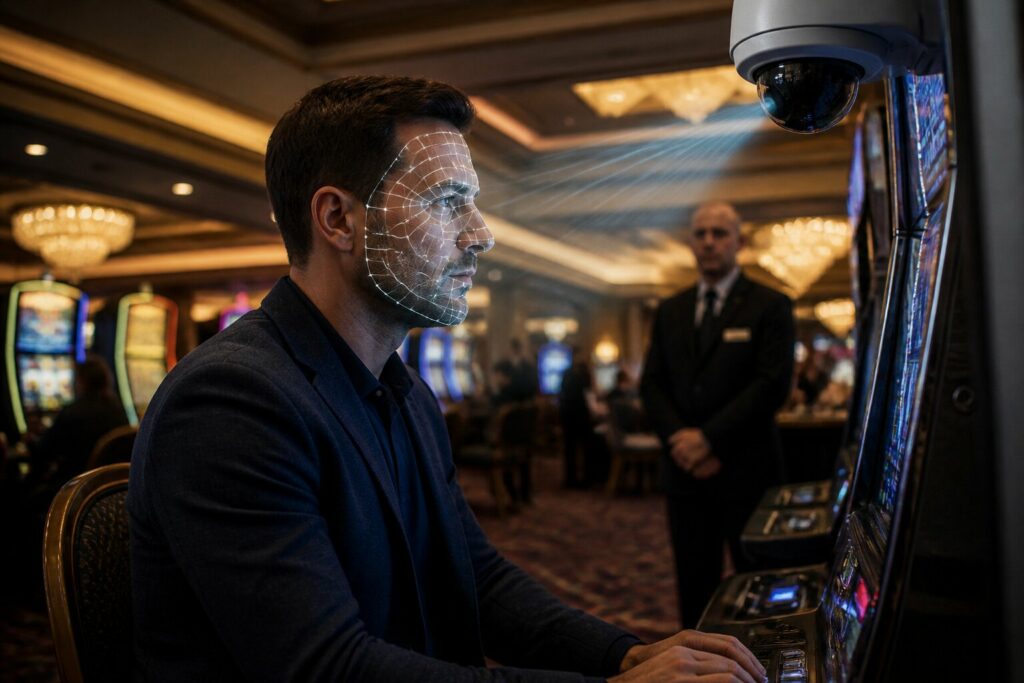
Do Slot Machines Use Facial Recognition? Casino Security Explained
Ever wondered just how closely you’re being watched when you place a bet on the slots? Casino security has always drawn attention, and with new technology arriving each year there are plenty of myths and questions circulating.
From high-tech cameras to visible security staff, it’s easy to imagine all sorts of secret systems tracking every move. Recently, talk of facial recognition being used at slot machines has been one of the louder rumours.
Curious whether those stories are accurate or just another casino tale, read on as we explain how modern casino security actually works and what it means for you.
Do Casinos Use Facial Recognition Technology?
Facial recognition is being adopted by some casinos around the world to enhance security. In several large properties overseas it helps to identify people on exclusion lists, or those linked to criminal activity, and it can assist in recognising high-value customers so staff can manage interactions more effectively.
In the UK, use is much more restricted. Operators must follow rules from the UK Gambling Commission and data protection laws such as GDPR. Any deployment of facial recognition needs to be lawful, necessary and proportionate, with clear policies about how data is handled.
Where technology is used, casinos are expected to be transparent about it and to use it only to protect customers and meet legal obligations. That means it is not a blanket tool deployed across every machine or venue, and its use is subject to oversight and audit.
How Does Facial Recognition Work in Casinos?
When permitted and set up correctly, facial recognition systems rely on cameras to capture images which are compared against a secure watch list, for example self-excluded customers or people barred for security reasons. Matches trigger discrete alerts for trained staff so they can respond appropriately.
Systems aim to minimise the amount of personal data retained and to keep processing limited to what is necessary. Controls include restricted access, encryption and retention policies aligned with privacy law.
It’s important to understand that the technology operates in the background to support security teams rather than to interfere with how games operate. Cameras and recognition systems serve to identify individuals for safety or legal reasons, not to alter game play.
Purpose of Facial Recognition in Casino Security
The main reasons for using facial recognition in a casino environment are safety and compliance. It helps prevent banned individuals from entering, supports self-exclusion schemes, and assists with investigations into crime or regulatory breaches.
Another key purpose is harm prevention. By being able to identify people who have chosen to self-exclude or who may require assistance, staff can intervene in a timely and appropriate way. This is part of broader duties operators have towards customer welfare and legal compliance.
These uses must be balanced against privacy rights, so any deployment is typically limited, monitored and subject to review to ensure it remains necessary and proportionate.
Is Your Privacy at Risk With Facial Recognition in Casinos?
Privacy concerns are understandable whenever biometric technology is discussed. In the UK, data protection law requires that any personal data collected is processed fairly, kept secure and used only for specified purposes.
Operators must minimise data collection and explain to customers why and how their information is processed. Access controls, secure storage and clear retention schedules are typical safeguards, alongside regular audits to check compliance.
If facial recognition is in use, there should be published information about it, and processes to allow individuals to query or challenge data handling where appropriate. These protections aim to reduce privacy risks while allowing venues to meet safety and legal obligations.
Myths & Misconceptions About Slot Machine Security
Many misconceptions surround both slot machines and the surveillance systems that protect them. One persistent myth claims casinos use facial recognition to change slot outcomes or to single out winners for different treatment. That is not how gaming systems are regulated or operated.
Slot outcomes are determined by licensed random number generators and are subject to independent testing and oversight to ensure fairness. Surveillance and recognition systems are separate security tools intended to safeguard the environment and support regulatory duties.
Another false idea is that cameras are there to spy on ordinary players. In practice, surveillance focuses on preventing crime, resolving disputes and enforcing exclusion policies, not on tracking the everyday behaviour of lawful customers.
Alternative Security Measures Used by Casinos
Facial recognition is only one tool among many. The backbone of casino security remains robust CCTV coverage, which helps with incident response and evidence gathering. Visible cameras act as a deterrent and support transparency when issues arise.
Identity checks at entry and during transactions are another standard measure. These checks confirm legal age, enforce self-exclusion, and assist with anti-money laundering obligations. Staff training complements technical systems, with teams prepared to spot concerning behaviour and to act sensitively.
Combined, these measures create multiple layers of protection. Operators design them to work together so that risks are reduced while customers can enjoy a fair, regulated environment.
What Are the Legal and Ethical Concerns?
Legal and ethical questions centre on three linked principles:
- necessity,
- transparency,
- proportionality.
Any use of facial recognition must be clearly justified. Operators should be able to explain why processing biometric data is necessary for a legitimate purpose and why less intrusive options were not suitable. That explanation should be documented and available to relevant stakeholders.
Lawful processing requires an appropriate legal basis and compliance with data protection rules. This includes carrying out a data protection impact assessment where required, setting clear retention periods, securing data effectively, and allowing individuals to exercise their rights, for example access and erasure where applicable.
Ethically, venues should inform customers about the presence of such systems and the purposes they serve. Information should be clear, visible and easy to understand so people can make informed choices.
Consent, where relevant, and opportunities to raise concerns are important:
- obtaining consent where it is the lawful basis for processing,
- providing straightforward ways for people to ask questions, complain or opt out where possible.
Independent oversight and regular reviews help ensure the technology is not misused. External audits, records of processing activities and input from privacy or ethics advisers support accountability.
Practical safeguards should be in place to reduce risks, such as:
- minimising the amount of personal data collected,
- restricting access to authorised personnel,
- using secure storage and encryption,
- regularly deleting data that is no longer needed.
Balancing operational needs with privacy protections is an ongoing challenge. Operators must be prepared to demonstrate that their practices meet both legal requirements and public expectations, and to adapt policies and procedures in response to new guidance or concerns.
What Does Facial Recognition Mean for Casino Visitors?
For the majority of visitors, facial recognition—if present—will be largely invisible and serve as a background security measure. Its practical impact is that operators can better enforce exclusion lists and respond quickly when legal or safety issues arise.
Greater safety and support can result when venues use technology responsibly, because it helps staff identify and assist people who need protection. At the same time, transparency about data use and clear avenues to raise questions are vital so customers know how their information is handled.
If you have concerns, look for published privacy notices at the venue or on the operator’s website, which should outline any biometric processing and the rights available to you. Ultimately, these systems exist to help meet regulatory obligations and to protect customers while ensuring the integrity of the gaming environment.
**The information provided in this blog is intended for educational purposes and should not be construed as betting advice or a guarantee of success. Always gamble responsibly.