
Why Do Casinos Remove Slot Machines: Impact on Withdrawals and Payouts
Ever noticed your favourite slot machine suddenly disappear from the casino floor or an online site? There are practical reasons behind these changes that go beyond a quick decision to tidy the floor.
What happens when a casino removes a slot game, and does it affect withdrawals or the payouts you receive? This article explains the main causes of removals, how they affect revenue and prizes, and what happens to any outstanding wins or jackpots.
Read on to understand the mechanics behind these choices and what they mean for players and operators alike.
Why Do Casinos Decide to Remove Slot Machines?
Slot machines, in venues or online, are regularly reviewed and updated to maintain quality and operational standards. A key reason for removing a title is simple performance: games that attract little play tie up space and resources better used by new or higher-performing options. Replacing underused machines helps keep the overall offering relevant and appealing to a wide range of players.
Technical compatibility is another major factor. Software and hardware both evolve; if a game no longer works reliably with current systems or the developer stops supporting it, removing the game prevents potential security or functionality problems. Regulatory shifts also drive removals. When rules change to demand clearer payout displays, different player protections, or other compliance measures, any game that cannot meet the new standard must be withdrawn.
Finally, changes respond to player demand and feedback. Titles that no longer fit player tastes are phased out in favour of games that better match current preferences. These adjustments aim to balance availability, safety and commercial viability. The next section looks at how such choices influence the casino’s finances and the wider game mix.
How Slot Machine Removal Affects Casino Revenue
Removing a slot machine alters the revenue landscape because each game contributes differently to overall income. Underperforming machines reduce average return on floor or platform space, so retiring them is a way to allocate resources more efficiently to games that generate more play and engagement.
Choosing which titles to replace involves analysing performance metrics, player behaviour and projected demand. Introducing new games can attract attention and renew interest from existing customers, which helps maintain long-term viability. Decisions about the game line-up are not taken purely for profit; they are also shaped by compliance and player protection considerations. Thoughtful curation supports a sustainable business now and preserves the ability to invest in future improvements.
Next, we’ll explain why removing a machine does not interfere with how withdrawals are handled.
Does Taking Out Slot Machines Change Withdrawal Times?
Withdrawing funds is a financial process separate from which games are available to play. Payment systems and reconciliation procedures run independently from the game library, so removing or adding machines does not change the mechanics of how withdrawals are processed.
Withdrawals follow established verification and security checks to protect customer funds, and those procedures remain consistent regardless of any changes to the games offered. If an operator has specific timelines or requirements for withdrawals, these continue to apply in the same way when a slot is taken offline. With that settled, it is useful to look at how removal can affect the assortment of payouts and prize structures players encounter.
The Impact on Player Payouts
Taking a title out of rotation can change the variety of payout profiles available on a platform, though it does not compromise the fairness or integrity of remaining games. Every game that stays available must adhere to regulatory standards covering payout transparency and audited performance. This section explores how changes in the game mix can alter the overall landscape of returns and prizes.
Potential Shifts in Return to Player (RTP) Percentages
Each slot has its own Return to Player percentage, which is displayed as required by regulation. When particular games are removed, the aggregate range of RTPs offered across the site can shift because the collection of available titles changes. That shift is a matter of variety rather than fairness: the operator’s responsibility is to ensure each listed game remains compliant and that RTPs are accurate and visible.
Are Jackpots and Bonus Payouts Affected?
When a slot is retired, jackpot opportunities and game-specific bonuses tied to that title end for future play. Any wins already secured are honoured in full and paid out according to the operator’s terms. In some cases, progressive jackpots tied to an individual game are concluded or managed according to published rules so players’ entitlements are protected. New titles replacing the retired games will bring their own bonus structures and prize potential, which contributes to ongoing variety for players.
Having covered payouts, the next section explains the practical fate of removed machines and software.
What Happens to Old or Removed Slot Machines?
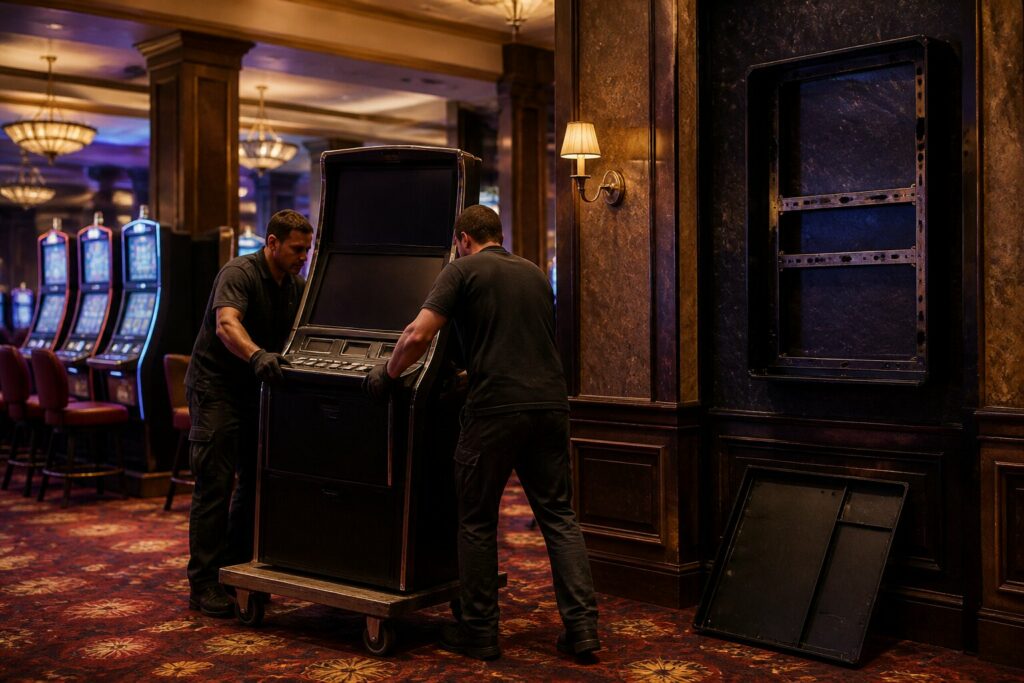
Physical machines that are decommissioned are typically returned to suppliers, refurbished, sold or disposed of in line with contractual and environmental obligations. For online games, the software is disabled and removed from public access while remaining records and audit logs are preserved for regulatory purposes.
If a removed game still has active bonuses, outstanding wagers or unresolved jackpot claims, those are handled according to the operator’s published terms and regulatory requirements. Transparency is important here: communications about how outstanding prizes are resolved are made clear so players know what to expect. With the mechanics explained, it is worth considering how visible these changes are to players and how they influence perceptions of fairness.
Do Players Notice When Machines Are Removed?
Some players will notice when a favourite title vanishes, especially if it had dedicated followings. Operators usually plan these changes to avoid sudden disruption: announcements, clear help pages and customer support help explain the reasons and outline what happens to any outstanding balances or rewards.
Changes can influence how players view the site’s fairness and reliability. Open communication and consistent application of rules help maintain trust. Removing a game reduces immediate choice in one sense, but operators generally aim to replace retired titles with suitable alternatives to preserve variety and appeal. This balance between change and continuity is governed not only by business needs but also by the regulatory framework discussed next.
Regulatory and Licensing Factors Influencing Machine Removal
Regulation and licensing requirements are frequent drivers of game removal. When rules evolve, operators must ensure that every title on offer complies with current standards for transparency, prize handling and player protection. That can mean removing games that cannot be adapted to new requirements or updating the library to meet clearer obligations around how RTPs and bonuses are displayed.
Licensing terms also shape which games can be offered, how they are promoted and how prizes are administered. Where a game no longer meets licensing conditions, withdrawal is mandatory to maintain the operator’s regulated status. These measures are intended to protect players and uphold fair, transparent provision of gambling services. Taken together, regulatory oversight, operational practice and player communication create a framework that keeps the offering legitimate and accountable.
The removal of slot machines is therefore a routine part of managing a modern casino offering: it keeps the product current, compliant and aligned with player expectations while safeguarding how prizes and withdrawals are handled.
**The information provided in this blog is intended for educational purposes and should not be construed as betting advice or a guarantee of success. Always gamble responsibly.