
Why Is Horse Racing Cancelled? Reasons for Races Called Off
There’s nothing more disappointing for fans and punters than hearing a race has been called off at the last minute. Whether you’ve planned a day at the course or placed a bet, cancellations disrupt plans and raise questions.
Weather is often blamed, but there are several other reasons a meeting can be abandoned. Understanding the common causes helps you manage expectations and know what to check next.
Read on to learn the main reasons races are postponed or cancelled, and what each situation means for those involved.
Who Decides If A Race Is Cancelled?
The decision to cancel a meeting is a coordinated one, not made by a single individual. Racecourse officials carry out the initial checks: they inspect the track, assess facilities and report any immediate hazards.
Stewards have the authority to halt a meeting if safety or regulatory standards aren’t met on the day. They act quickly when conditions deteriorate, always prioritising horse and rider welfare.
Governing bodies provide the framework within which these choices are made. They set rules and offer guidance for complex or wide‑reaching situations that affect more than one venue. Together, these layers of oversight ensure cancellations are considered carefully and consistently.
What Weather Conditions Cause Cancellations?
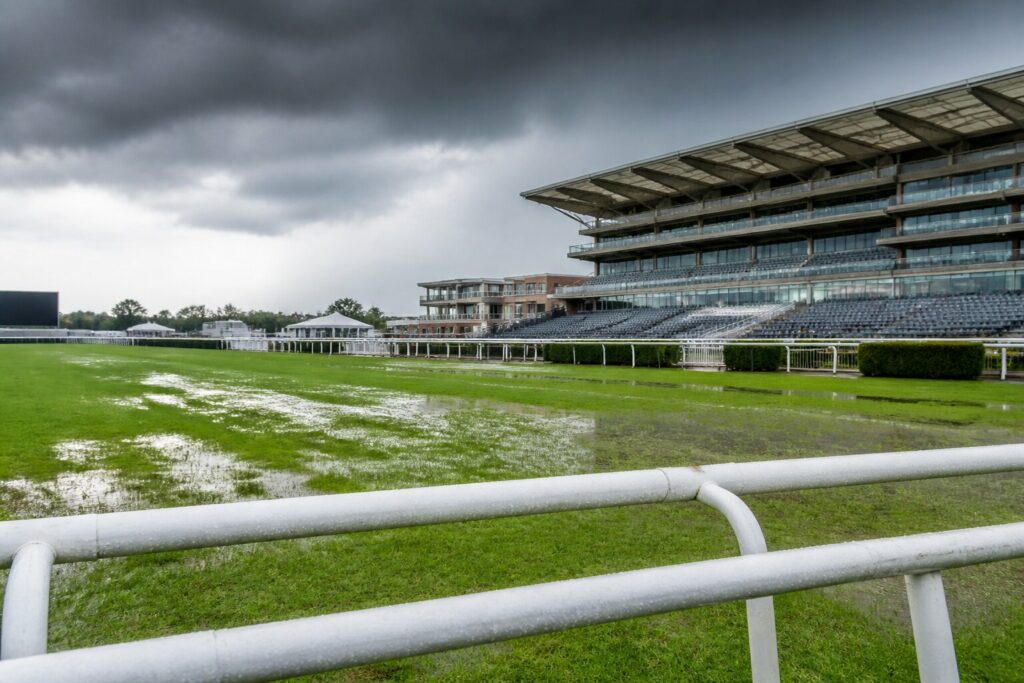
Weather plays a major role because it directly affects the track and the safety of participants. Heavy rain can leave a course waterlogged, with soft, uneven ground that increases the risk of falls. Snow and ice create hard, slippery surfaces that are unsafe for running and jumping.
Strong winds can damage fencing or disturb temporary structures, creating hazards for horses and people. Very high temperatures also present welfare concerns for horses and staff, and can lead to meetings being postponed if conditions are judged harmful.
Officials assess each situation against safety standards rather than making a knee‑jerk call. If the forecast or actual conditions threaten safety, a meeting will be abandoned rather than risk those on the course.
Track Safety And Surface Concerns
Weather may cause trouble, but the underlying issue is often the condition of the track itself. Waterlogging, frost damage, holes or loose turf make a surface unsuitable for racing. Even artificial surfaces require careful inspection for wear or defects.
Inspectors examine the entire circuit and, where applicable, take readings or perform tests to judge firmness and grip. If any part of the course could compromise a horse’s stride or a jockey’s balance, racing will be suspended.
These checks are routine but thorough because the consequences of a compromised surface can be severe. When there’s doubt, postponement protects the horses, riders and the integrity of the competition.
How Do Veterinary Issues Lead To Abandonment?
Health problems among horses can force organisers to stop a meeting. Contagious illnesses or outbreaks in a stable can quickly put multiple animals at risk, leading to a swift decision to cancel while vets investigate and containment measures begin.
Individual veterinary concerns—such as injuries or problems found during pre‑race examinations—can also prompt cancellation if they suggest a wider risk to the meeting. Veterinary teams have the authority to recommend abandonment when animal welfare cannot be assured.
When these issues arise, measures are taken to protect the wider racing population and to allow veterinary teams to manage the situation. That may include testing, isolation and targeted medical care, and decisions are based on the best available clinical advice.
Jockeys, Staff And Transport Problems
Racing depends on a coordinated team. Shortages of essential staff can prevent a meeting from starting because the necessary safety and operational functions cannot be guaranteed.
Examples of essential staff include:
- stewards
- medical personnel
- groundstaff
If any of these groups are not available in sufficient numbers, organisers may not be able to meet regulatory or safety requirements.
Transport disruptions affect more than spectators. If participants or kit cannot reach the course because of road closures, severe delays or vehicle breakdowns, the meeting may become unworkable.
Transport issues can prevent:
- horses travelling to the course
- jockeys and support staff arriving on time
- critical equipment and tack being delivered
Industrial action or strikes that hit logistics or staffing have caused cancellations in the past for the same reason. Organisers must consider the scale and likely duration of the disruption when deciding whether to proceed.
Ultimately, race organisers weigh whether available resources are sufficient to run the day safely. When they are not, postponement or cancellation protects everyone involved and ensures compliance with regulatory and safety obligations.
Public Safety And Security Reasons For Cancellation
Occasionally cancellations are driven by risks to the public. These can include:
- security alerts
- power failures
- fire incidents
- gas leaks or other emergencies that make it impossible to manage the event safely
Large events depend on a range of functioning systems to keep people safe. Key elements include:
- crowd control and barriers
- on-site medical response
- trained stewarding and security staff
If any of these systems are compromised, continuing the event would put attendees and staff at risk. Organisers therefore act quickly, and decisions are taken in consultation with emergency services when needed.
When a cancellation is necessary, it is handled with urgency and professionalism. Information is communicated to attendees as promptly as possible, and any immediate safety measures, such as evacuation or cordons, are followed to ensure safety is never compromised.
Regulatory Decisions And Stewards’ Powers
Racing is run under strict rules set by governing authorities, and stewards are empowered to enforce those rules on the day. Stewards may investigate incidents, impose penalties, or take immediate action when risks arise. If regulations or safety standards are breached, stewards can stop a meeting or individual races to protect participants.
Regulatory oversight ensures that cancellations and suspensions are not arbitrary. There are established procedures for making and recording decisions, and formal routes for parties to challenge or appeal outcomes.
Oversight helps achieve several practical aims:
- transparency and consistency in how decisions are reached
- clear, documented reasons for cancellations or disciplinary action
- an accessible appeals process so decisions can be reviewed
- protection of the welfare of horses, jockeys, officials and the public
This framework helps maintain confidence in the sport by making decisions explainable and defensible. Above all, it ensures that the welfare of horses and people remains central to how meetings are run and regulated.
What Happens To Bets When A Race Is Cancelled?
When a race is abandoned, most wagers on that specific event are voided and stakes returned, but different operators may have slightly varied terms. It’s sensible to be familiar with the terms that apply to your account so you know how cancellations are treated.
If a race is rescheduled and the operator chooses to carry bets over, that will be made clear in the terms or through official communications. For clarity on individual circumstances, contact your bookmaker’s customer service or check their published rules.
Keeping records of your bets and understanding the terms reduces uncertainty when a meeting is affected.
Can Cancelled Races Be Rescheduled?
Rescheduling is possible, but not automatic. Organisers consider several practical factors before rearranging a race, including:
- the overall fixture list and how a new date would fit with other meetings,
- track availability and whether the course can safely host the meeting on an alternative day,
- whether horses, trainers, jockeys and officials can attend on a possible new date.
If the calendar is already congested, or any of the above cannot be met, some races cannot be slotted back in and must be left off the schedule.
When a reschedule is feasible, the racecourse and the relevant governing bodies announce the new arrangements and explain how entries and bets will be handled. That information normally covers whether entries are carried forward, whether substitutes are permitted, and how existing bets are treated by bookmakers and pools.
If rescheduling is not possible, the meeting is treated as cancelled and refunds or voided bets follow the appropriate rules and the terms set by the race operator and betting providers.
Checking official channels is the best way to find out whether a particular race will be rearranged. These include the racecourse website and social media, the relevant racing authority announcements, and communications from your bookmaker or betting exchange.
How Are Prize Money And Entries Handled After Cancellation?
Entry fees and prize money are dealt with in line with established industry rules and the organiser’s published policies. Organisers will usually set out terms and conditions that explain what happens in different scenarios, and these are applied alongside any relevant regulatory requirements.
If a meeting is abandoned before racing begins, entry fees are typically refunded to the person or account that paid them. The exact outcome can vary depending on when the abandonment occurs, the organiser’s specific terms and the method of payment used. In some cases partial refunds or administrative deductions may apply, so it is important to check the event’s published conditions.
Prize money is generally only paid out when a race is completed and official results are declared. If a race is cancelled part way through or declared void, prize distribution normally does not take place. Where races are run under amended conditions or distances, organisers and regulators will confirm whether standard prize arrangements still apply.
If an event is rescheduled rather than cancelled, organisers may allow entries, declarations and fees to roll over to the new date. That decision rests with those running the meeting and will be communicated to participants in accordance with their policies. Organisers should also provide clear information on alternative options, such as refunds or substitutions, where these are available.
All decisions are taken within applicable regulatory guidelines to ensure fairness and transparency. Participants should keep an eye on official communications from the organiser and contact the event office for specific questions, complaints or to request further information about refunds and prize arrangements.
Can I Get A Refund On Tickets Or Hospitality?
Ticket and hospitality refunds follow the racecourse’s published policy. When a meeting is cancelled, venues usually offer either a refund or the option to move your booking to a future date. The racecourse will contact customers with the next steps and any deadlines to accept the alternative.
Keep booking confirmations and receipts, as organisers commonly ask for these when processing refunds. You should also note where you bought the tickets, because the correct process may depend on whether you booked directly with the racecourse or via a third party such as an agent, travel company or hospitality provider.
If you need immediate answers, the racecourse’s customer service team is the right point of contact. If you paid by card, your card provider may be able to advise on chargeback options if you cannot resolve the matter with the vendor, but start by following the racecourse’s stated procedure and timescales.
How Are Cancellations Announced To Punters?
Organisers aim to publish cancellations quickly through official channels so punters get accurate information. Racecourse websites and verified social media pages are often the first place to look for updates.
Customer service teams at both racecourses and bookmakers can confirm the status of a meeting and explain how refunds or voided bets will be handled. Major media outlets also report on significant cancellations, which helps reach a wider audience.
For reliable information, stick to official sources and direct communications; that way you’ll know exactly what has happened and what to expect next.
**The information provided in this blog is intended for educational purposes and should not be construed as betting advice or a guarantee of success. Always gamble responsibly.