
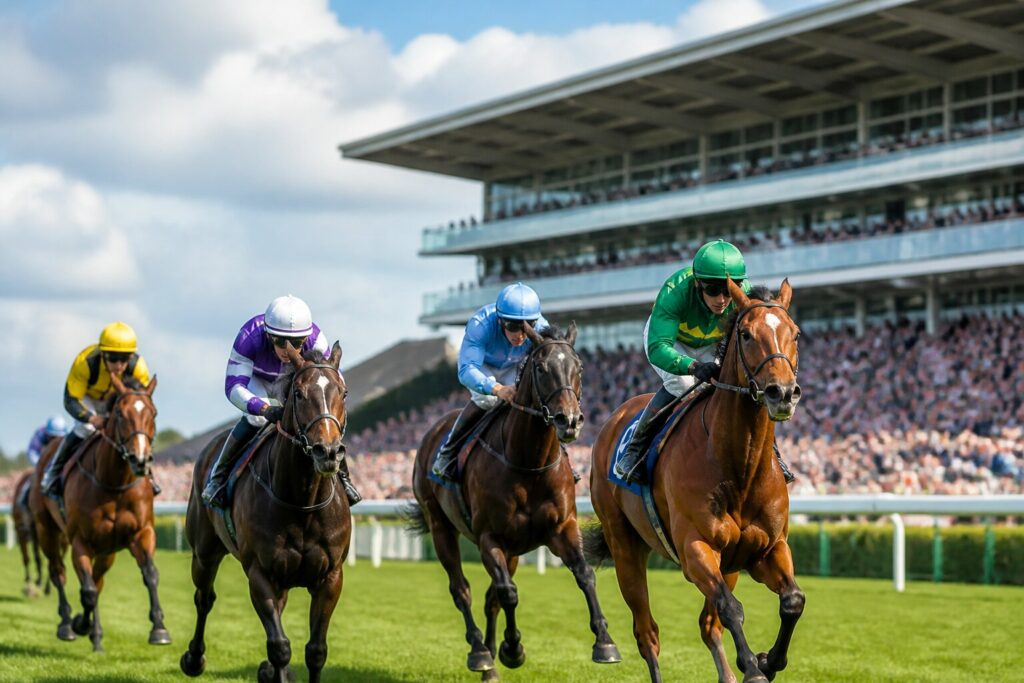
When Do Bookies Pay 4 Places? Each Way Betting Explained
Thinking of backing a horse or a golfer and noticed the “each way – 4 places” tag? Each-way betting splits your stake between a win and a place. When bookmakers pay four places, the place half can be settled for more finishers than usual, which can improve the chance of a return on that portion of your stake.
This guide explains when bookies typically offer four places, what rules decide those terms, how the place fraction works, and how unusual outcomes such as non-runners or dead heats affect your bet. Read on to understand the details so you can spot the best situations for an each-way wager.
When Do Bookmakers Offer Four Places?
Bookmakers tend to offer four places on races where large fields and strong interest make it sensible to pay out beyond the usual two or three places. High-profile meetings and big handicaps are common examples because they attract many runners and active betting markets.
The decision to pay four places is a bookmaker-by-bookmaker choice and can vary by race. Sometimes the offer is part of a special promotion for a particular card or day. It is also subject to the bookmaker’s own terms and the final number of declared runners, so the offer can change up to race time.
If you are watching an event, look for the specific place terms shown beside the market. That tells you whether four places apply for that race and under what conditions.
Key Rules That Decide Four-Place Each-Way Terms
Several practical rules influence whether a race will be paid to four places. Field size is the main factor: many bookies require a minimum number of runners — often 16 or more — before offering four places. If late withdrawals reduce the field below this threshold, the place terms may be reduced.
Race type matters too. Handicaps with large fields are the most frequent candidates for four-place offers. Non-handicap contests or small-field races rarely attract those extra place terms because there are fewer likely finishers and different competitive structures.
Finally, the bookmaker’s published terms for a specific market will clarify all conditions, including the place fraction and any exceptions. Since these vary, always check the market details for the race you are interested in before placing a bet.
Which Types Of Races Commonly Use Four Places?
Four-place each-way offers are most commonly seen in big-field handicaps at major meetings. Events that draw many runners and significant attention in the betting market are the usual candidates, such as long-distance handicaps at leading racecourses.
Flat races with large entry lists and some high-profile jumps contests can also feature four-place terms. The deciding elements tend to be the predicted number of runners and how competitive the market looks on the day.
Because offers are set per race, it helps to familiarise yourself with the card ahead of time. That way you know which contests are likely to pay to four places and whether the place fraction is worth the stake you plan to risk.
How Is The Place Fraction Applied For Four Places?
When four places are paid, the place half of an each-way stake is settled at a fraction of the win odds rather than at full odds. Common fractions used for four places are 1/4 or 1/5 of the win odds. This fraction determines the return on the place part if your selection finishes within those paid positions.
Place Return = (Stake × Win Odds × Place Fraction) + Stake
For example, a £5 each-way bet (£10 total) on a horse at 10/1 with a 1/5 place fraction, finishing third, would be settled like this. The win part loses. The place part pays: £5 × 10/1 × 1/5 = £10 winnings, plus the £5 place stake returned, giving a total place return of £15.
Understanding the fraction is important because it changes the economics of the each-way bet. Two selections at shorter odds with a generous place term can sometimes provide better value than one at much longer odds with fewer place spots.
How Do Non-Runners, Dead Heats And Voids Affect Four-Place Each-Way Bets?
Non-runners can alter the number of places paid if their withdrawal reduces the field below the threshold for four places. When that happens, the market may revert to three, two or fewer places according to the terms. Stakes on horses that do not start are normally returned.
A dead heat, where two or more competitors cross the line level for a paying position, means the winnings for that place are shared by dividing by the number of horses involved. That reduces the amount you receive for the affected place but is handled by the standard dead-heat rules applied at settlement.
If a race is declared void — for example, because it is abandoned or run under conditions that invalidate the market — stakes are usually returned. All of these outcomes are settled in line with the market rules published for each race; check those details to see how settlements are handled in the event of changes on the day.
What Should You Check In The Terms Before Placing A Four-Place Each-Way Bet?
Before placing a four-place each-way bet, make sure you have read the specific market terms so you understand the conditions that will apply. Look for three key items: which races are included in the offer, the minimum number of runners required for four places, and the precise place fraction used for the payout.
Race eligibility tells you whether the event you want is covered. The minimum runner requirement explains how late withdrawals could affect the number of places paid. The place fraction shows how much the place half will return relative to the win odds.
Also note any additional clauses that might affect settlement, such as special rules for void races or dead heats. If you have questions, our help pages set out these terms in plain language. You can also use the site tools to limit stakes and manage activity, keeping your betting aligned with what you intend to risk.
If you want to proceed, check the market terms for the specific race and place your each-way stake with those conditions in mind.
**The information provided in this blog is intended for educational purposes and should not be construed as betting advice or a guarantee of success. Always gamble responsibly.