
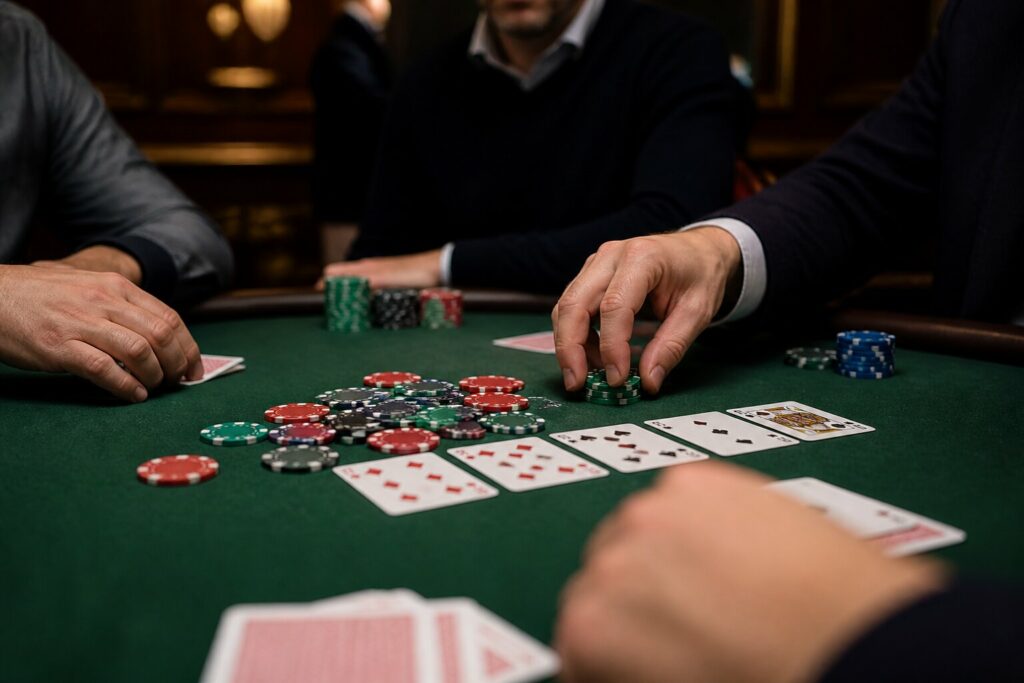
How to Play Poker: Rules, Hands, and Guide for Beginners
Looking to learn how to play poker but not sure where to start? You’re in the right place.
Poker can look complicated at first, but once you have the essentials in place, you’ll follow the action and make better choices. This guide explains the rules, the hand rankings and the types of games beginners tend to enjoy the most, with clear examples to help you feel confident at the table.
Read on for a practical introduction that keeps things friendly and focused on enjoying the game safely and responsibly.
What Is Poker?
Poker is a card game where players compete to form the best hand or to convince others to fold through betting and strategic play. Each hand combines a mix of card distribution and decision-making, so every round unfolds differently and rewards careful choices. Success depends on understanding the rules, reading opponents, and managing risk.
Play typically moves through a series of betting rounds. Players receive cards, place wagers, and can check, call, raise or fold depending on their assessment of the situation. Bluffing, position at the table and pot odds are common strategic elements that influence decisions.
It’s played socially:
- at home among friends,
- in clubs and casinos,
- online on licensed platforms.
There are many variants, but most share the same core goal: win the pot, which is the pool of bets placed during a hand. Variants differ in how cards are dealt, how many are shared or hidden, and in the betting structure, but the central aim remains the same.
Poker is for adults only and should be treated as entertainment. Be aware of the risks and set limits before you play. Stick to those limits, never chase losses, and seek help if gambling stops being fun.
How Do You Set Up a Poker Game?
Setting up a poker game requires only a standard 52-card deck, a place for players to sit and a way to represent stakes—chips are the usual choice but you can play for fun without money. Agree in advance on which variant you’ll play, the chip values if you’re using them, and any betting limits so everyone understands the format.
Choose a dealer (this often rotates in home games), shuffle thoroughly and deal the agreed number of cards. Hand everyone the same starting amount of chips and make sure all participants are of legal age. A short pre-game chat about house rules prevents misunderstandings later and keeps play fair. Play within a pre-set budget so the focus stays on the game rather than on chasing losses.
What Are the Basic Poker Rules?
Each poker variant has its own details, but the basic flow is consistent: cards are dealt, players act in turn and rounds of betting build the pot. Play moves in a clockwise direction and a hand typically begins with one or more forced bets—antes or blinds—that create initial stakes.
On your turn you can check to stay in without adding chips when no bet is outstanding, bet to place chips into the pot, call to match the current highest bet, raise to increase the bet, or fold and leave the hand. Betting continues until all remaining players have matched the highest bet or folded. After the final betting round the remaining players show their cards and the best hand wins the pot. Variants change how many cards each player holds and the number of betting rounds, so confirm the rules before you begin.
Understanding Poker Hands and Rankings
Knowing hand rankings is fundamental because every showdown depends on which hand outranks another. Here are the main hands, from strongest to weakest:
- Royal Flush: A, K, Q, J, 10, all of the same suit
- Straight Flush: Five cards in sequence, all of the same suit
- Four of a Kind: Four cards of the same value
- Full House: Three of a kind plus a pair
- Flush: Five cards of the same suit, any order
- Straight: Five cards in sequence, any suits
- Three of a Kind: Three cards of the same value
- Two Pair: Two separate pairs
- One Pair: Two cards of the same value
- High Card: When no other hand is made, the highest card determines the winner
Familiarity with these rankings speeds up play and helps you judge how competitive your hand is in any given situation.
How Does Betting Work in Poker?
Betting is how the pot grows and how players influence one another’s choices. A hand often starts with forced bets so there’s something to win. After cards are dealt, players act in turn and betting rounds proceed as community or private cards are revealed.
Players can pass by checking when no bet is required, place chips by betting, match an opponent’s amount with a call, increase the stakes with a raise, or fold to concede the pot. Betting continues until all active players have contributed equally to the current stake or folded. Some games have fixed limits on how much can be bet, while others allow open betting; the structure you choose shapes the pace and strategy of a session.
When you play, set a spending limit before the session and stick to it so the focus stays on entertainment rather than financial pressure.
What Are the Common Types of Poker Games?
Poker takes many forms, and each offers a different balance of strategy and action. Most versions use standard hand rankings but vary in how many cards players receive, which cards are shared, and how betting is structured. Your choice will depend on how much complexity you want and whether you prefer more strategic or faster-paced play.
Two of the most widely played variants are described below to give a sense of how structure changes the game.
Texas Hold’em Explained
Texas Hold’em is often recommended for beginners because the rules are straightforward and the game is easy to follow. Each player receives two private cards, and five community cards are dealt face up in stages. Players make their best five-card hand from any combination of their two private cards and the five community cards. Betting occurs at several points as the community cards are revealed, which creates opportunities for strategic decisions based on evolving information.
Omaha Poker Overview
Omaha resembles Texas Hold’em but gives each player four private cards. To form a hand you must use exactly two of your private cards combined with three of the five community cards. This rule changes the range of possible hands and typically leads to more frequent strong hands compared with Hold’em. Betting rounds and community cards are handled in a similar way, but the additional private cards make hand-reading and hand potential more complex.
What Are the Most Common Poker Terms?
A handful of terms will help you follow the table and speak the language of the game. Here are the key ones to know:
- Blinds: Mandatory bets placed before the cards are dealt by one or more players to create initial stakes.
- Pot: The total chips or money collected from all bets during a hand.
- Dealer: The person who distributes cards; in casual games the dealer position usually rotates.
- Community Cards: Cards dealt face up in the centre that all players may use in variants like Hold’em and Omaha.
- Hole Cards: The private cards dealt to each player.
- Check: Passing the action without betting when no bet is outstanding.
- Call: Matching the current highest bet to remain in the hand.
- Raise: Increasing the current bet, forcing others to match or fold.
- Fold: Withdrawing from the current hand and forfeiting any claim to the pot.
- Showdown: When remaining players reveal their cards to determine the winner.
Using these terms correctly keeps the game clear and helps avoid confusion when decisions are being made.
Is Poker a Game of Skill or Chance?
Poker mixes random card distribution with decisions that affect outcomes, so it blends elements of both probability and strategy. The cards you are dealt come down to chance, but the decisions you make influence how that chance plays out. Over a long run of hands, players who study tactics, manage their money and make consistent, rational choices tend to perform better against less-skilled opponents.
The strategic side includes things such as how you bet, how you read opponents and how you manage your bankroll. These factors can be learned, practised and improved, and they often determine who wins more frequently over months and years. That said, even the best strategies cannot remove the role of randomness in individual hands or short sessions.
Because variance is part of the game, short-term results can swing wildly. A player can make correct decisions and still lose a session because of unlucky cards. Understanding this helps keep expectations realistic and supports long-term improvement.
Treat poker as a form of entertainment, not a guaranteed way to make money. To keep play safe and enjoyable, follow responsible practices such as:
- setting sensible financial limits and only using money you can afford to lose
- deciding on time limits before you start and taking regular breaks
- stepping away if the game stops being fun or if you feel pressured to chase losses
If you have concerns about your gambling, seek help from recognised support services.
Essential Poker Etiquette for Beginners
Good etiquette keeps games fair and pleasant for everyone. A few simple habits make a big difference:
- Wait for your turn to act and avoid discussing your hand while play continues.
- Be polite to other players and avoid criticising their choices.
- Handle chips and cards carefully and keep your movements clear to prevent confusion.
- Remain attentive so the game moves smoothly.
- Keep celebrations measured so other players are not disrupted.
- Avoid slow rolling, angle shooting or other behaviour that could be seen as disrespectful.
Respectful behaviour makes the evening more enjoyable and helps maintain a healthy environment where players of all levels can learn and improve. Pay attention to table rules, follow the dealer’s instructions and, when in doubt, ask courteously rather than assuming. This keeps things fair and helps new players feel welcome.
Frequently Asked Questions About Poker
Here are answers to common questions beginners often ask.
How old do I need to be to play poker?
In the UK you must be 18 or over to play poker for real money. This age restriction helps protect younger people from gambling-related harm.
Is it possible to play poker responsibly?
Yes. Playing responsibly means setting and observing limits on time and money, taking breaks, and treating the game as entertainment rather than a way to earn. If you have concerns, contact support organisations such as GamCare or BeGambleAware for confidential advice.
Can I play poker without risking money?
Absolutely. Many people play for chips, points or simply for the social experience. Casual games are a good way to practise rules and strategy without financial pressure.
Where can I find support if I’m concerned about my gambling?
Support is available through specialist organisations that provide confidential help and practical tools for managing gambling. Contact services like GamCare or BeGambleAware for guidance.
Is poker legal in the UK?
Yes, provided you play at licensed venues or on approved sites and are of legal age. Always confirm a provider’s credentials before staking money.
If you still have questions about rules or options for playing, check reliable resources or speak with a knowledgeable organiser before joining a game.
**The information provided in this blog is intended for educational purposes and should not be construed as betting advice or a guarantee of success. Always gamble responsibly.