
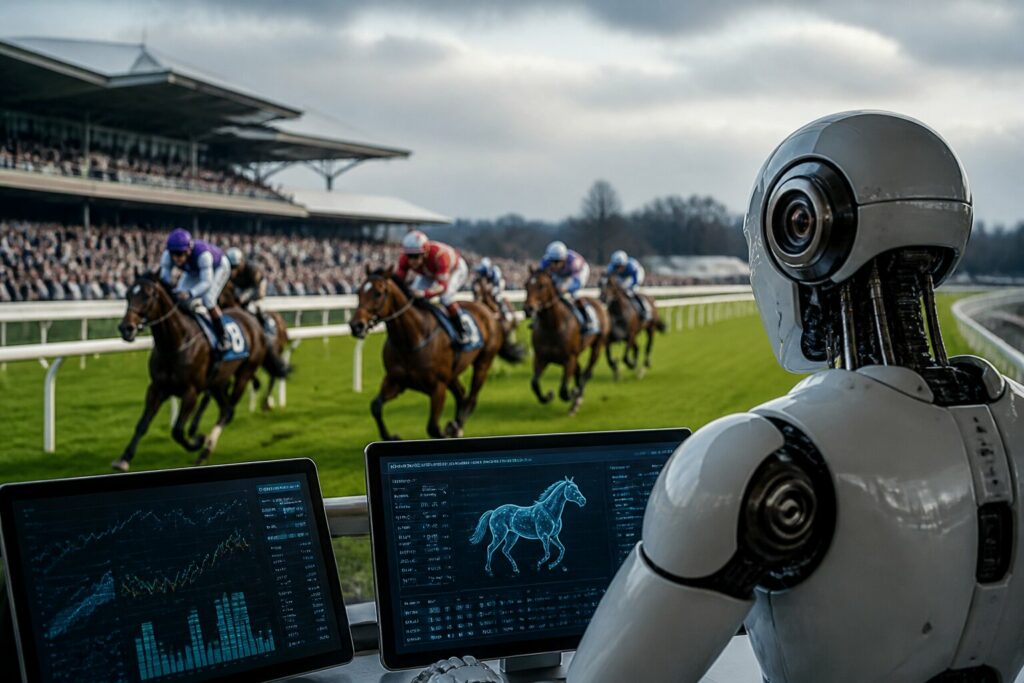
Can Artificial Intelligence Predict Horse Racing Results Accurately?
Horse racing has long been prized for its uncertainty, which keeps fans and punters engaged. Recently, artificial intelligence has begun to play a larger role, promising deeper analysis of the many variables that affect a race.
This article looks at how AI is being applied to horse racing, the strengths and limits of those systems, and what that means for anyone using AI-generated predictions. Read on to see where the technology helps and where caution still matters.
How Does AI Work in Horse Racing Predictions?
Artificial intelligence for racing prediction analyses vast amounts of historical and real-time data to identify patterns. Systems ingest details such as a horse’s past results, jockey and trainer statistics, track surface, weather on race day, distance and starting position. They also consider recent form to assess whether a horse appears to be improving or declining.
Once fed this data, the algorithm searches for correlations and recurring combinations that have preceded particular outcomes in the past. For example, it may recognise that certain horses consistently perform better over a specific distance or on softer ground, or that a trainer tends to bring horses to peak fitness at particular meetings. The output is a ranked view of likelihoods, not a guarantee.
AI cannot foresee every last-minute event, such as an unexpected injury or a tactical change, but it can surface patterns that might otherwise be missed. Later sections explain what those patterns look like and where the technology still falls short.
Key Factors AI Analyses in Racing Data
AI examines multiple factors to form its assessments, focusing on measurable indicators that have shown predictive value. Core elements commonly used include:
- Past performance: the horse’s results in previous races, including finishing positions and margins.
- Jockey and trainer records: win rates and course-specific performance for the team involved.
- Track conditions: how a horse performs on different surfaces and going descriptions.
- Weather: forecasts and how changes in conditions have affected form historically.
- Distance: results over varying trip lengths and how stamina or speed influences outcomes.
- Draw position: where a horse starts and how that has mattered at the specific course and trip.
- Recent form: signs of improvement or decline across the latest runs.
These factors are weighted by the model according to their historical relevance. Careful data cleaning and proper context are essential; for instance, a win over an unsuitable distance is less informative than a narrow defeat in a race that mirrors the upcoming conditions.
Can AI Outperform Human Experts in Horse Racing?
AI and human experts approach predictions differently and can each contribute useful perspectives. Experienced analysts bring qualitative insight such as stable whispers, observation of a horse’s demeanour in the paddock and nuanced reading of racing tactics. These human judgements can capture subtleties that do not appear in databases.
AI excels at processing far greater volumes of data, discovering non-obvious statistical relationships, and applying consistent criteria without emotional bias. That allows it to test many hypotheses, adjust to new data quickly, and produce repeatable outputs.
In practice, the best outcomes often come from combining both approaches. A machine may highlight contenders that fit a statistical profile while a human can judge factors like reported fitness levels or tactical plans. Neither side eliminates risk, so decisions should balance model output with informed human appraisal.
Common Myths About AI in Betting
There are several misconceptions about what AI can achieve in betting. One persistent myth is that AI can guarantee wins. In reality, no system can predict every outcome with certainty. Another mistaken belief is that AI renders human judgement redundant. While models are powerful, they do not yet replace experienced observation and contextual understanding.
Some people expect a purchased AI service to produce consistent profits. Such services vary widely in quality and methodology, and past performance is not necessarily indicative of future results. A more realistic view is to treat AI as a data-driven aid that can improve information but not eliminate uncertainty.
Mindful use of AI involves understanding its scope and limitations and avoiding overreliance on any single source of advice.
What Are the Limitations of Artificial Intelligence in This Field?
Despite impressive data-processing abilities, AI faces notable constraints. The sport contains many unpredictable elements: sudden weather shifts, a horse balking at the start, or an unreported minor injury can change the result in an instant. Models can only work with the inputs they receive, so missing, inaccurate or poorly contextualised data undermines predictions.
Model overfitting is another issue: a system tuned too closely to past quirks may fail to generalise to new races. Equally, some influential factors are difficult to quantify, such as a horse’s temperament on race day or an ad hoc tactical move by a jockey. Those human and situational aspects often remain outside purely data-driven approaches.
These limitations mean AI should be used as part of a considered process rather than as a sole decision-maker. Keep a clear budget and avoid escalating stakes in response to model outputs alone.
Ethical Considerations of Using AI for Racing Predictions
There are important ethical points around transparency, fairness and player protection when AI is applied to betting. Systems should be clear about their methodology and performance records so users understand what they are relying on. Overstating accuracy risks misleading people into placing greater trust than the evidence supports.
Protecting vulnerable individuals is a priority. AI-driven tools must not use targeting that encourages risky behaviour or exploits those showing signs of harm. Responsible design includes built-in prompts about limits and accessible options for self-exclusion or support, helping users make informed choices and step back if needed.
Regulation and oversight play a role in ensuring products meet standards for player protection and honest marketing. Those building or promoting predictive services should prioritise user wellbeing alongside technical performance.
Is AI Changing the UK Horse Racing Industry?
AI has influenced how data is collected and interpreted across the sport, from analytic tools used by racing teams to products offered to followers of the game. Odds-setting, form analysis and performance monitoring increasingly rely on quantitative models, which has altered the conversation around form and value.
New platforms now surface statistical insights that can help viewers understand races more deeply. Trainers and owners also use data-driven tools to inform conditioning and race planning. At the same time, the human elements of horsemanship and in-race tactics remain central to outcomes, so the technology complements rather than replaces traditional expertise.
If you follow these developments, you will notice a shift in how information is presented, with greater emphasis on measurable indicators and data visualisation.
Should You Trust AI Predictions for Horse Racing?
AI-generated predictions can offer valuable perspective, helping to highlight trends and probabilities that might not be obvious at first glance. They are most useful when treated as one input among several, combined with contextual knowledge and personal judgement.
Use model outputs to broaden your understanding of a race rather than as definitive instructions. Keep gambling within clear limits and ensure it remains an entertainment choice. If ever you feel betting is becoming harmful, support is available and it is sensible to make use of self-help tools or professional advice.
Use AI Insights Wisely
When considering tips from AI, weigh the information against what you know about the race, the participants and any fresh reports from connections. A cautious, informed approach makes it easier to assess when a prediction is worth attention and when it should be treated with scepticism.
Keep Betting Safe and Responsible
Maintain a spending plan and avoid increasing stakes to chase returns suggested by a tool. Betting within your means and pausing when needed preserves control and reduces the risk of harm.
Help Is Always Available
If gambling begins to affect your wellbeing, seek support from dedicated services and use available safeguards. Prioritising personal welfare over short-term outcomes keeps the activity sustainable and safer for everyone.
**The information provided in this blog is intended for educational purposes and should not be construed as betting advice or a guarantee of success. Always gamble responsibly.