
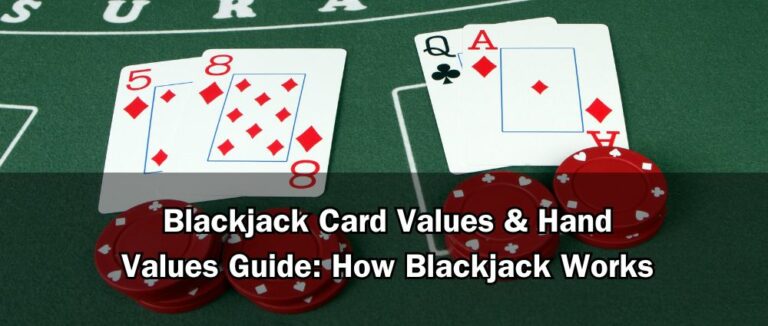
Blackjack Card Values & Hand Values Guide: How Blackjack Works
If you’ve ever been curious about how blackjack works or what makes a winning hand, you’re in the right place. Whether you’re completely new or just want to brush up on the basics, understanding card values is the key to becoming a confident player.
Blackjack is a popular casino game, but it can feel confusing if you’re not sure how the cards add up or what a hand value actually means. We’ll keep it simple and clear.
By the end of this guide, you’ll know how each card in the deck counts, how your hand is valued, and what you need to aim for at the table. Ready to boost your blackjack know-how and play smarter next time? Let’s begin.
What Are Card Values In Blackjack?
In blackjack, every card in the deck has its own value, used to total your hand as you aim to reach 21 without going over. These values are straightforward and broadly consistent across most games, whether played online or in a land‑based casino, though table rules can vary by venue and by variant.
Number cards from 2 to 10 are worth their face value. So a 7 of hearts counts as 7 points, a 4 of clubs counts as 4 points, and so on. The suit of the card does not affect its value and does not influence the outcome.
All picture cards — Kings, Queens, and Jacks — are each worth 10 points, no matter the suit. For example, a Queen and a 9 make 19, while a Jack and a 10 total 20. If you draw any two 10‑value cards (such as a King and a Queen), the hand totals 20.
Aces are special because they can count as either 1 point or 11 points. You choose whichever value helps your hand the most without going over 21. For instance, Ace + 6 can be 7 or 17 (often called a “soft 17”), because the Ace is currently counted as 11.
If you draw another card that would make 17 exceed 21, the Ace’s value can adjust from 11 to 1 to keep the hand in play. For example, Ace + 6 + 9 becomes 16 (“hard 16”), as the Ace now counts as 1. With two Aces, the initial total is usually treated as 12 (11 + 1), and further cards can shift one or both Aces to a value of 1 if needed to avoid going bust.
An Ace with any 10‑value card (10, Jack, Queen, or King) totals 21 in two cards and is commonly called a “blackjack” or “natural”. Some tables pay different odds on a natural and may have specific rules on how the dealer handles soft totals (for example, whether the dealer hits or stands on soft 17). Always check the table rules before you play.
That is the whole system in a nutshell. While the number of decks, payout terms, or specific house rules may differ, the basic card values remain the same. Understanding card values helps you read your hand, but it does not guarantee any outcome. Set limits, play responsibly, and only gamble with money you can afford to lose.
How Is An Ace Counted?
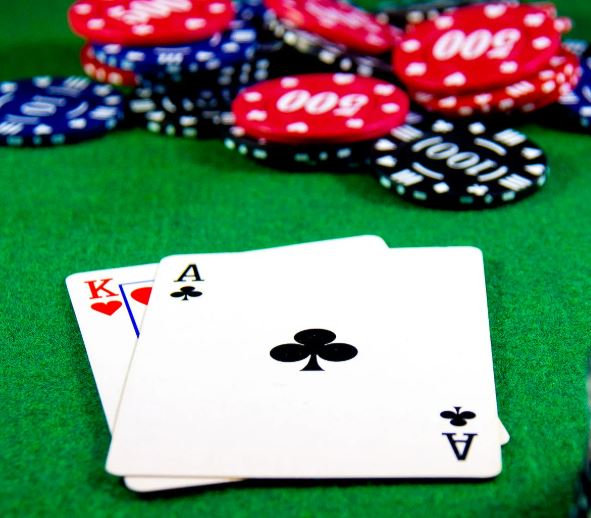
The ace is a unique card in blackjack because it can be worth either 1 point or 11 points, whichever is better for your hand within the table’s rules. Outcomes depend on chance, and while sound decisions can help you manage risk, no system or approach guarantees a win.
If counting the ace as 11 does not push your total over 21, it is typically valued at 11. For example, an ace and a 7 make 18, often called a “soft 18”. A “soft” hand includes an ace counted as 11 and cannot bust with one additional card while it remains soft.
If using the ace as 11 would make you go bust, it will automatically count as 1. So, if you have an ace, a 7, and a 9, your total would be 17, with the ace counting as 1. This is a “hard 17”, and once the hand is hard, taking another high card can cause a bust.
With multiple aces, only one can count as 11 at a time without busting. For instance, ace + ace counts as 12 (11 + 1). If you then draw a 9, the total becomes 21 (11 + 1 + 9). Similarly, ace + ace + 8 would be 20, as the second ace remains valued at 1.
As more cards are drawn, the value of an ace may change from 11 to 1, or vice versa, so a hand can move from “soft” to “hard”. For example, ace + 5 is a soft 16 (11 + 5), but if you draw a 9, the ace converts to 1 and the total becomes 15 (1 + 5 + 9). This adjustment follows standard rules and happens automatically; you do not select both values at once.
Table procedures can vary slightly by venue (for example, whether the dealer hits or stands on a soft 17, or how aces are treated after a split), but the principle for valuing aces remains the same. Check the table rules or ask the dealer so you can total your hand accurately without implying a particular result.
Play responsibly and for entertainment. Set limits, do not wager more than you can afford to lose, and do not chase losses. If you are unsure about the rules at your table, ask the dealer for clarification before you place a bet, and consider taking a break if gambling stops being fun.
How Do You Calculate Hand Values?
Calculating your hand value in blackjack is straightforward once you know the card values and how they combine. Number cards count at their face value, picture cards (Jack, Queen, King) are worth 10, and the ace can count as either 1 or 11. Suits never affect the total, and jokers are not used.
Your aim is to total as close to 21 as possible without going over. Simply add up the points for each card in your hand. For example, if you have a 5, a 6, and a King, your total is 21 (5 + 6 + 10). Another example: 10 + 2 + 3 gives 15. You recalculate the total each time a new card is drawn.
Some tables pay differently for a “blackjack” (an ace plus any 10-value card as your first two cards), but that is a house rule. The method of calculating the hand total is the same either way.
If you have an ace, treat it as 11 unless that would take you over 21, in which case it becomes 1. For instance, an ace and a 9 can total 10 or 20, and you would use 20 because it stays within 21. Similarly, ace + 7 can be 8 or 18, and you would normally count 18 until a new card forces a change.
With multiple aces, count one ace as 11 and the rest as 1s unless that causes a bust. For example, ace + ace is 12 (11 + 1). Ace + ace + 9 can be 21 (11 + 1 + 9). If you then draw a 9, you would downgrade the 11 to 1 and recalculate: 1 + 1 + 9 + 9 = 20, which keeps you in play.
This flexibility means your total can change as cards are drawn, especially when aces are involved. Always choose the highest total that does not exceed 21. A “soft” total can become “hard” after a hit if the ace must drop from 11 to 1 to avoid busting.
If your total goes over 21 at any stage, you bust and the hand ends. If not, you are still in play. Outcomes depend on chance and on house rules (for example, whether the dealer hits or stands on soft 17), and no strategy can guarantee a win.
Set a budget, play within your means, and do not chase losses. If play stops being enjoyable, take a break or seek support. Terms, payouts, and rules vary by table, so check them before you start.
These ace behaviours lead into the terms soft and hard: a soft total includes an ace counted as 11 without busting, while a hard total has no ace counted as 11 (all aces, if any, count as 1). Examples include soft 17 (ace + 6) and hard 17 (10 + 7, or ace + 6 after the ace has been reduced to 1).
What Is A Soft Hand Versus A Hard Hand?
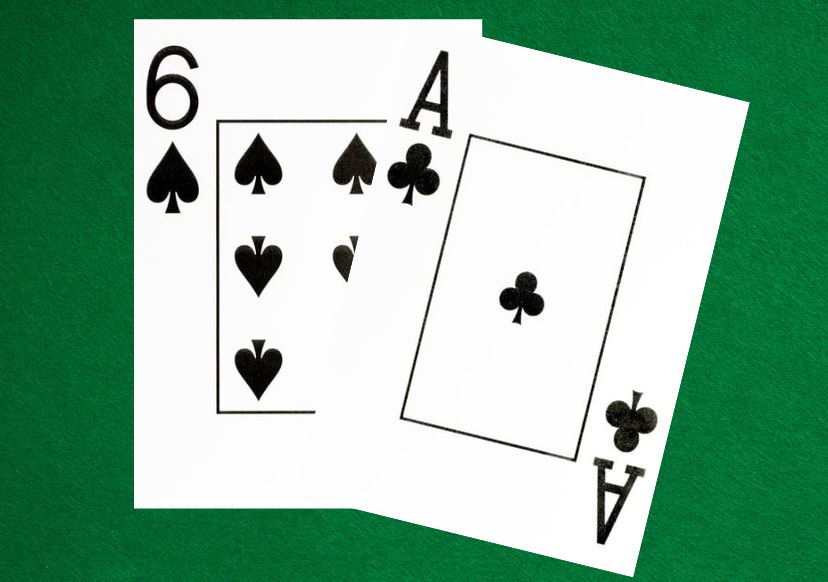
In blackjack, the terms soft hand and hard hand describe whether an ace is part of your total and how that ace is currently being valued. This distinction matters because it affects the level of risk when you choose to hit, stand, double, split (where permitted), or take other allowed actions at the table.
A soft hand is any hand that contains at least one ace counted as 11 without the total exceeding 21. For example, an ace and a 6 is a soft 17. Likewise, ace, 3, and 3 is also a soft 17, because one ace can still be valued at 11. With multiple aces, only one can be valued as 11 at any given time; additional aces are treated as 1 unless changing one to 11 would not cause a bust.
If you draw another card and counting the ace as 11 would push the total over 21, the ace can be reduced to 1 instead, giving the hand a degree of protection against an immediate bust. This built‑in flexibility often influences decisions such as hitting or doubling, as a soft total can absorb one more card more safely than an equivalent hard total.
This flexibility means a soft hand can change status. The moment all aces must be valued at 1 to avoid going over 21, the hand effectively becomes hard. For instance, if you hold ace, 6 and then draw a 9, the ace drops to 1 and you now have a hard 16. From that point, the hand no longer has the same protection and subsequent hits carry a higher risk of busting.
A hard hand either contains no ace at all, or any ace present must be counted as 1 to keep the total at 21 or below. A 10 and a 7 is a hard 17. So is an ace, a 6, and a King, because here the ace cannot be 11 without busting. Hard hands offer less room to adjust, so decisions on totals close to 21 generally require more caution, and options like doubling may be more restricted by house rules.
Table rules can vary by venue, such as whether the dealer hits or stands on soft 17, whether doubling after a split is allowed, and how many times you may split aces. These differences can change the expected outcome of particular decisions, which is why basic strategy charts often distinguish between soft and hard totals.
Outcomes are not guaranteed and no strategy removes the house edge. Use any strategy information as guidance only, consider the rules in play, and make decisions that suit your risk tolerance and experience level. Always check the table signage or the game rules for details before you start.
Blackjack involves chance and you can lose as well as win. Set a budget, avoid chasing losses, and only play with money you can afford to lose. If play stops being enjoyable, take a break or seek support. You must be over the legal age to gamble in your jurisdiction.
Now that the key terms are clear, it helps to know what counts as the best possible start. In blackjack, an ace and a 10‑value card on the initial deal is called a “blackjack” or “natural”, which typically pays at enhanced odds under standard rules, though payout rates and conditions can vary by table.
What Counts As Blackjack?
A blackjack is the strongest standard starting hand in the game. It occurs only when your first two cards total exactly 21, with no additional cards drawn or actions taken.
To form a blackjack, you need an ace and any 10‑value card. Tens, Jacks, Queens, and Kings each count as 10 points, while the ace can count as 1 or 11. In this specific case, the ace is treated as 11 so the two cards make 21.
Where table rules permit, a natural blackjack is usually settled immediately. This is subject to the dealer’s hand: if the dealer’s first two cards also make 21, the result is a push and your original stake is returned.
A true, or “natural”, blackjack refers only to 21 achieved with the initial two cards. Reaching 21 with three or more cards is not a blackjack and is resolved under the table’s standard procedures for a regular 21.
Payouts for a natural blackjack depend on the house rules. The commonly advertised return is 3:2, although some tables pay 6:5 or even 1:1. These variations significantly affect expected returns, so it is important to review the paytable and rules displayed at the table before placing a bet.
Specific exceptions often apply. For example, 21 made after splitting aces is commonly not treated as a natural blackjack and may be paid at the regular rate. In some games the dealer checks (“peeks”) for blackjack when showing an ace or 10‑value card; in others, resolution is deferred until the dealer draws.
Optional features such as insurance and side bets have separate rules, odds, and payout structures. These wagers are not required to participate in the main game and typically carry a different house edge from the core blackjack hand.
Rules can also vary by number of decks in use, whether the dealer hits or stands on soft 17, whether surrender is available, and any table limits. These factors influence the return to player and the volatility of outcomes.
Always read the game rules and paytable before you play, stake only what you can afford to lose, and remember that outcomes are determined by chance. If gambling stops being fun, seek support and consider setting limits or taking a break.
How The Dealer Plays And Calculates Hand Values
In blackjack, the dealer follows a fixed set of procedures that do not change mid-hand. These rules are determined by the table and venue, and the core conditions are displayed at the table so players can understand how the round will be conducted before placing a stake.
While procedures are consistent, specific house rules can vary between venues and game variants. Always check the table signage and ask the dealer for clarification before you begin, as rule differences can affect how hands are resolved.
The dealer will always show one card face up while keeping the other face down until player actions are finished. After every player has completed their turn, the dealer reveals their full hand and then carries out the required actions strictly according to the posted table rules.
Some games use a “hole card” system where the dealer takes a second card immediately and checks for blackjack when appropriate, while others reveal the second card only after player decisions are made. This procedural difference does not change how card values are calculated but can influence the order of events and when a round ends.
Dealers must draw additional cards, known as hitting, until reaching at least 17. What happens on a soft 17 (an ace counted as 11 with a 6) depends on house rules. Many tables require the dealer to stand on all 17s, while some require a hit on soft 17, which can change the pace of play and slightly alter the house advantage.
When the dealer stands, they total their hand using the same card values as the players: number cards at face value, picture cards as 10, and aces as 1 or 11 to achieve the best total at or below 21. For example, A–6 can be 7 or 17; if a hit produces A–6–10, the ace adjusts to 1 so the total becomes 17 rather than 27.
If the dealer’s hand exceeds 21, they bust and all remaining active player hands are settled as winners for that round in line with the table rules. If the dealer reaches 17 to 21, results are compared against each player’s final total; equal totals usually result in a push and the stake is returned.
Because the dealer’s actions are prescribed in advance, their play is predictable and consistent from hand to hand. That predictability informs how players may choose to handle pairs, splits, and doubles, but outcomes are not certain and every hand is subject to chance and the randomness of the deal.
Nothing in this overview is financial or betting advice. Always play responsibly, set and stick to limits, and only gamble what you can afford to lose. Be aware that house rules and game variants differ, returns are not guaranteed, and no strategy ensures success.
How Do Splits And Pairs Affect Hand Values?
When you are dealt two cards of the same value, such as two 8s or two Kings, you may have the option to split them into two separate hands. This action is known as splitting pairs and is offered in many, though not all, blackjack variants and venues. Availability can differ between tables, live dealer games, and digital formats.
If you choose to split, you place a second wager equal to your original stake, and each of the two original cards becomes the first card of a new hand. This second bet must sit within the table’s minimum and maximum limits. The dealer then deals an additional card to each new hand, and you play them one after the other according to the table’s rules.
After a split, hand totals are calculated in the usual way, but you track each hand independently. Many casinos treat certain outcomes differently: for example, an Ace plus a 10-value card on a split Ace hand is commonly counted as 21 rather than a natural blackjack, so it typically pays even money and not any enhanced blackjack rate. Pushes, wins, and losses are resolved separately for each hand.
House rules can vary. Some tables allow resplitting (creating up to three or four hands), while others limit or prohibit it. Splitting Aces often carries extra restrictions, such as receiving only one additional card per Ace with no further hits or resplits, and doubling on split Aces is usually not permitted. Some venues also restrict splitting 10-value cards, even when the ranks differ (e.g., a Ten and a Queen).
Other rule details can influence decisions. Certain games allow doubling down after a split (often called DAS), while others only permit doubling on specific totals (commonly 9, 10, or 11) or not at all after a split. Surrender, if offered, is typically only available on the original two-card hand and not after you have split. Check the table signage or ask the dealer to confirm what is in use.
Game conditions—such as the number of decks, whether the dealer hits or stands on soft 17, and any limits on resplitting—may affect the expected return and recommended play. No approach removes the house edge, and outcomes remain uncertain on every hand.
Splitting can improve your position in certain scenarios, but it also increases the total amount you have at risk, especially if resplits or doubles are permitted. You may find yourself managing several hands at once, which raises volatility and can lead to faster swings in results.
Set time and spend limits in advance, stake only what you can afford to lose, and avoid chasing losses. Gambling is a form of entertainment and should be undertaken responsibly. If you are unsure about the rules or your limits, pause and seek clarification before you play.
As a general guide, players often split to avoid very weak combined totals—such as splitting 8s to steer away from a hard 16—and commonly split Aces to give each hand a chance to reach a strong total. By contrast, splitting 10-value cards is typically discouraged and may be restricted by the venue, while pairs like 5s are more often treated as a candidate for doubling (subject to rules) rather than splitting.
These are strategic considerations rather than guarantees. The right choice can depend on the dealer’s upcard, table rules, and your tolerance for risk, and results will vary from hand to hand.
With pairs covered, another common option with strong starts is doubling down. This involves increasing your stake—usually by an amount equal to your original bet—in exchange for committing to draw one (and only one) additional card, subject to table rules and any limits on doubling after a split.
Doubling can magnify both potential wins and losses. It may only be available on certain totals or after specific actions, and it is frequently restricted following a split. Always confirm the table rules before deciding whether to double.
How Does Doubling Down Impact Your Hand Value?
Doubling down allows you to increase your original wager by placing an equal additional stake in exchange for exactly one extra card. In most games this option is available only on your first two cards, though the precise rules vary by table. Some venues restrict doubling to certain totals (often 9–11), to specific hand types (such as hard totals only), or limit it after a split.
Once you choose to double, you receive a single card and must then stand; no further hits are permitted. Your final hand value is the sum of your two original cards plus this one extra card. If that total exceeds 21, you bust as normal and the dealer completes their hand under house rules. If you win, you are paid on the combined stake; if you lose, you forfeit both parts of the wager; if it is a push, both stakes are returned.
Doubling can be a way to seek additional value from promising situations, for instance when your total is 9–11 and the dealer shows a weaker upcard such as 2–6. However, outcomes are never guaranteed and remain subject to chance, the shuffle, and how the dealer’s hand develops. Past results do not predict future results, and the house edge and rules of the game continue to apply.
Because you must stand after receiving one card, your flexibility is reduced and your risk and variance increase. You are committing extra funds on a single draw, which can amplify wins and losses alike. If you feel uncertain about the spot, the limits are high, or the house rules are unclear, it is perfectly reasonable to take a regular hit or stand instead.
Always confirm the table rules before acting. Check whether doubling is permitted after a split (DAS), on soft hands, or only on certain totals; whether the dealer stands or hits on soft 17; how pushes are handled; and any limits that affect the size of a doubled bet. Clarify whether the table uses a dealer peek for blackjack, as this can determine when the hand ends and how doubles are resolved.
Only stake money you can afford to lose. Consider setting deposit, time, and loss limits, take regular breaks, and stop if play is no longer enjoyable. Gambling is a form of entertainment and should be kept under control.
How To Read Hand Totals During Play
Reading your hand total in blackjack means keeping a simple running count as each card is revealed. Number cards use their face value, picture cards (Jack, Queen, King) count as 10, and the ace is flexible, counting as 1 or 11 depending on what keeps the hand within 21.
This running total includes all cards in your hand, not just the first two. Update the sum after each hit so you always know your current position against 21 and the table rules.
A hand like 6 and Queen totals 16. If you then draw a 4, it becomes 20. Similarly, 10 and 7 is a firm (or “hard”) 17, while two 8s make 16. These running checks help you see where you stand before choosing your next move.
Another example: 3 + 5 + 2 equals 10, and drawing a King takes you to 20. If you start with 9 and 2 (11), drawing an 8 moves you to 19. Keeping these small updates clear prevents errors and supports measured decisions.
When an ace is in the mix, use the flexibility explained earlier. For example, ace and 6 totals 17 if the ace counts as 11 (often called a “soft 17”). If you then draw a 9, the ace drops to 1 so the hand becomes 16 instead of busting. Another example: ace and ace is 12 (11 + 1), not 22, and ace + ace + 9 makes 21.
Soft hands can change to hard hands as more cards arrive. For instance, ace + 5 (soft 16) becomes hard 16 if you add a 10-value card, because the ace must be treated as 1 to stay under 21. Recognising this shift keeps your total accurate and avoids overestimating your safety margin.
With multiple aces, count one ace as 11 only if it does not push you over 21, and treat any additional aces as 1. If a later card would bust the hand, reduce the ace from 11 to 1 and recalculate. This step-by-step adjustment keeps the total accurate as the hand develops.
As a quick check: ace + 3 + 7 can be 21 (11 + 3 + 7) if the ace counts as 11, but if you then draw a 6, convert the ace to 1 and the total becomes 17 (1 + 3 + 7 + 6). Reframing the ace like this avoids confusion and keeps the arithmetic straightforward.
Thinking of the ace as adjustable keeps the arithmetic light. By tracking the total after each card, your decisions to hit or stand stay grounded in the numbers and the table rules rather than guesswork.
House rules vary. Some tables have the dealer hit on soft 17, and payouts for a natural 21 (“blackjack”, ace plus a 10-value card) can differ by game variant. Always check the rules in advance so your expectations are clear.
Remember, blackjack outcomes depend on chance and no approach guarantees success. Keep play recreational, set time and spend limits, and only stake what you can afford to lose. If play stops being enjoyable or you feel pressure to recover losses, take a break and consider using account tools to stay in control.
Common Misconceptions About Card Values
It is easy to pick up a few misunderstandings about card values when learning blackjack, so let’s clear up some of the most common ones. Getting the basics straight helps you make informed choices at the table without assuming outcomes or overestimating the impact of any single card.
Sound knowledge reduces avoidable mistakes, but it does not predict results. Outcomes are uncertain and each round is independent, so use these points simply to understand how totals are calculated.
Some players think face cards like Kings, Queens, and Jacks are all worth different points, but they are all worth 10 each. The numbered 10s are also worth 10, so any 10-value card contributes the same total and there is no advantage between them.
This means a King and a Jack are functionally identical for scoring. Whether your 10-value card is a 10, J, Q, or K, the total it adds to your hand is the same under standard rules.
Aces can confuse new players as well. Remember, an ace is never worth more than 11 and can drop to 1 when it helps your hand, not both at the same time. This flexibility creates “soft” totals (where the ace counts as 11) that can become “hard” totals (counting the ace as 1) if adding 11 would cause a bust.
For example, A-6 can be 7 or 17 depending on the situation. With multiple aces, only one can count as 11 at a time without busting: A-A is 12 (11+1), and A-A-9 is 21 (11+1+9), but if you add a high card that would push you over 21, aces adjust down to 1 as needed.
Another myth is that blackjack means any hand adding up to 21. In truth, only an ace paired with a 10-value card on your first two cards counts as a true blackjack. This is sometimes referred to as a “natural”.
A total of 21 made with three or more cards is simply a 21 and is treated differently under most house rules, including payout differences and how pushes are handled. Always read the displayed table rules before you play, as variations do exist between venues.
Finally, suits such as hearts and clubs never affect card values. They are not used in blackjack scoring at all, and there are no trump suits or bonuses for particular suits in standard formats.
Even when multiple decks are used, suits remain irrelevant to the total. Focus on the numerical values only, not the symbols on the cards.
Keep these points in mind and the numbers will always make sense, helping you read hands clearly and avoid common errors. Rules and payouts can vary by venue and game variant, so make sure you understand the specific table rules before you start.
Blackjack is a game of chance with an element of decision-making. No strategy can eliminate the house edge, and results are never guaranteed. Set limits, play within your means, and only participate if you are legally permitted to do so (18+ where applicable).
If play stops being enjoyable, take a break. Support services are available should you need advice or assistance.
**The information provided in this blog is intended for educational purposes and should not be construed as betting advice or a guarantee of success. Always gamble responsibly.